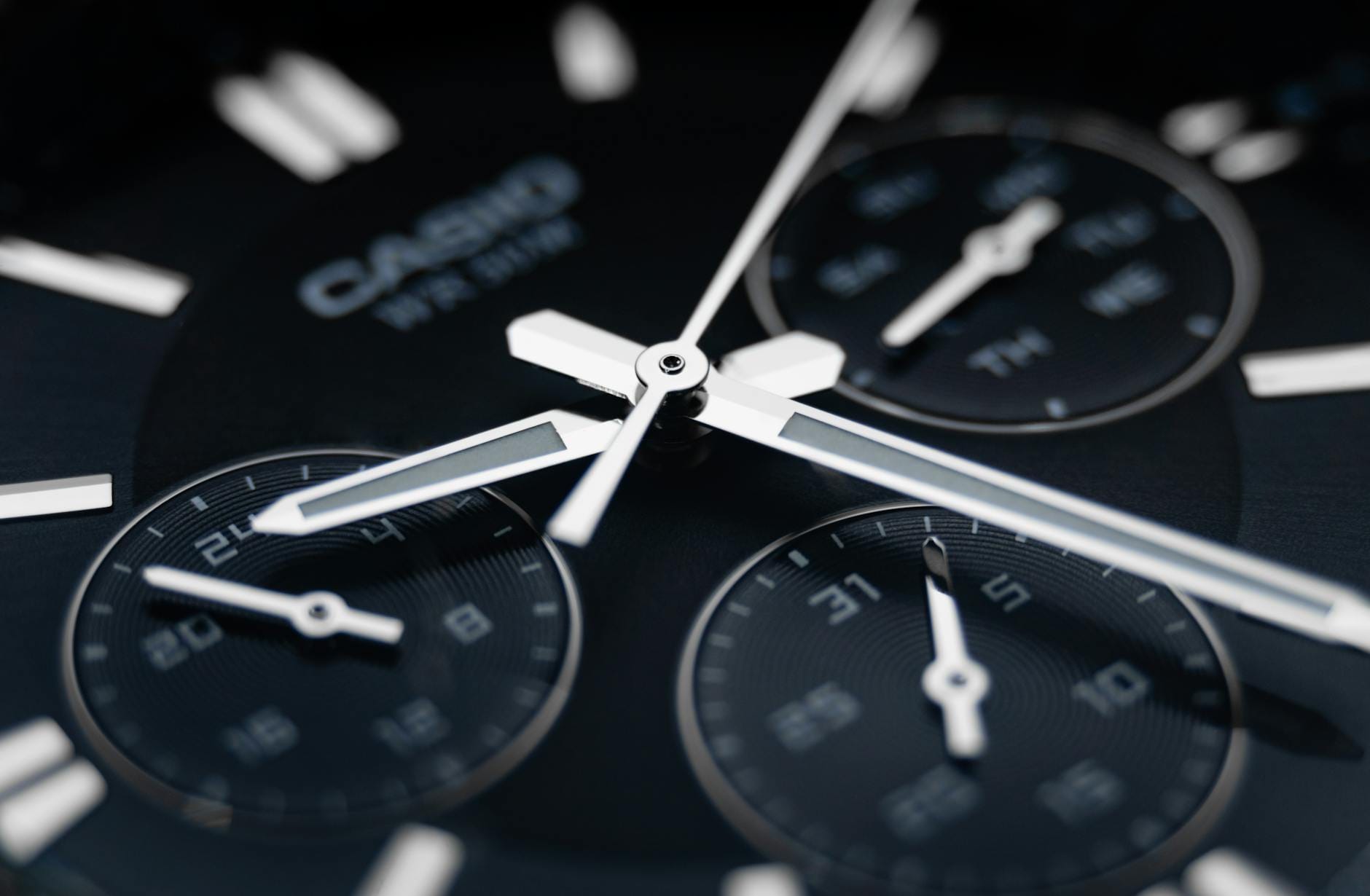
Zenith's new Chronomaster Revival A384 replicates the prized tropical patina of the 1969 original at EUR 7,900 retail. With El Primero movement heritage, sub-1,000 production history, and strong Asian auction precedent, this is a serious collector reference — not a lifestyle purchase.
TL;DR: Zenith has released a new Chronomaster Revival A384 with a tropical-dialed aesthetic, honouring the patina-rich originals from the late 1960s. Limited production, strong secondary market precedent, and deep provenance make this a serious acquisition target for Asian collectors tracking vintage-inspired chronographs.
Zenith Chronomaster Revival A384: The Patina Play That Collectors Have Been Waiting For
Zenith has once again reached into its Le Locle archives to deliver a watch that serious collectors will recognise immediately as more than a nostalgic exercise. The new Chronomaster Revival A384 draws its identity from the original A384, first produced in 1969 and powered by the legendary El Primero calibre — one of the first automatic chronograph movements ever made. What distinguishes this latest release is its deliberate celebration of patina: the dial treatment mimics the warm, tobacco-brown degradation that only decades of oxidation can produce on original examples, a quality that commands extraordinary premiums on the secondary market today.
Original A384 references in genuine tropical dial condition — where the lacquer has shifted from black or silver to a rich brown under ultraviolet exposure — have sold at auction for between CHF 18,000 and CHF 45,000 depending on condition and provenance. A pristine example with box and papers sold at Phillips Geneva in 2022 for CHF 37,800, well above its CHF 20,000 high estimate. The Revival A384 enters the market at approximately EUR 7,900 retail, offering collectors a factory-fresh interpretation of that same aesthetic at a fraction of the vintage price — though the investment calculus is, of course, entirely different.
What Makes the A384 Revival a Study in Provenance-Driven Design?
The El Primero calibre at the heart of the A384 is itself a piece of horological history. Launched on January 10, 1969 — the same year as the Heuer Calibre 11 and Seiko 6139 — the El Primero was the first integrated automatic chronograph movement to beat at a high frequency of 36,000 vibrations per hour, enabling one-tenth of a second precision. Zenith famously saved the tooling and movement parts from destruction in the 1970s by hiding them in the factory attic, a story that has become one of watchmaking's most celebrated acts of preservation. That narrative of survival adds genuine provenance depth to every El Primero-equipped piece.
The Revival A384 measures 38mm in steel, faithful to the original case dimensions that made the A384 so wearable by modern standards. The tri-colour sub-dial arrangement — blue, grey, and white — is reproduced with period accuracy, and the stepped bezel profile mirrors the 1969 original closely enough that, at a distance, the two generations are nearly indistinguishable. The applied indices and dauphine hands carry a warm lume treatment that reinforces the aged aesthetic without resorting to artificial distressing. Production numbers have not been officially confirmed as strictly limited, but Zenith's Revival series has historically been produced in quantities of under 1,000 pieces per reference, sustaining secondary market premiums of 15–30% above retail within the first 18 months of release.
Why Asian Collectors Should Pay Attention to This Reference
The Asian collector market has shown consistent appetite for vintage-inspired chronographs with verifiable movement heritage. In Hong Kong and Singapore auction rooms, El Primero-equipped Zenith pieces have appreciated steadily: a 1971 Zenith A278 sold at Bonhams Hong Kong in 2023 for HKD 68,000 (approximately USD 8,700), representing a 40% gain over its 2018 hammer price. Collectors in Tokyo, Taipei, and Shanghai have increasingly treated the Revival series as a bridge position — acquiring factory-fresh pieces with documented provenance while original vintage examples become scarcer and more expensive to authenticate.
The tropical dial aesthetic holds particular resonance in Asian markets, where humidity and climate have historically produced some of the most dramatic natural patina on watches that passed through Southeast Asia in the 1960s and 1970s. Several of the most celebrated tropical-dial Zeniths in private collections have Asian provenance, having been purchased new in Hong Kong or Singapore and worn daily through decades of humid conditions. The Revival A384's manufactured patina is, in a sense, a tribute to that regional history — a point that discerning collectors in the region will not miss.
Collection-Building Insight: Positioning the Revival A384
For collectors building a chronograph reference library, the Revival A384 occupies a specific and defensible niche. It is not a speculative flip — the retail price leaves limited room for short-term arbitrage unless the piece is acquired at retail and held through a period of scarcity. The stronger case is as an anchor piece in a Zenith-focused collection, paired with an original A384 or A278 to illustrate the design lineage across five decades. Collectors who acquired the earlier Chronomaster Revival A385 at EUR 7,400 retail in 2021 have seen secondary prices stabilise between EUR 8,500 and EUR 9,200 on Chrono24 as of early 2025 — a modest but consistent premium that reflects sustained collector interest rather than speculative heat.
The watch is available through Zenith boutiques and authorised dealers across Asia, including locations in Hong Kong, Singapore, Tokyo, and Beijing. Given the brand's track record with Revival references and the enduring mythology of the El Primero movement, the A384 merits serious consideration from any collector who values movement history, design fidelity, and the slow poetry of patina — whether natural or faithfully reconstructed.
Frequently Asked Questions
What is the retail price of the Zenith Chronomaster Revival A384?
The Zenith Chronomaster Revival A384 is priced at approximately EUR 7,900 at retail through authorised Zenith boutiques and dealers globally, including across Asia.
How does the Revival A384 compare to an original vintage A384 in value?
Original vintage A384 examples in strong condition sell at auction for between CHF 18,000 and CHF 45,000, with tropical-dial specimens commanding the highest premiums. The Revival offers the aesthetic at a fraction of the vintage cost, though it does not carry the same investment appreciation profile as a genuine 1969 original.
What is the El Primero movement and why does it matter to collectors?
The El Primero is widely recognised as one of the first automatic chronograph movements ever produced, launched in January 1969. It beats at 36,000 vibrations per hour, enabling one-tenth of a second precision. Its survival story — movement parts hidden in a factory attic to prevent destruction during the quartz crisis — gives it exceptional provenance depth in horological history.
Are Zenith Revival pieces produced in limited quantities?
Zenith has not always assigned strict edition numbers to Revival references, but production has historically remained below 1,000 pieces per reference. This relative scarcity has supported secondary market premiums of 15–30% above retail within the first 18 months on platforms such as Chrono24 and through auction houses.
Why do tropical dials carry such high premiums at auction?
Tropical dials develop their characteristic brown or caramel tone through decades of natural oxidation and ultraviolet exposure. Because the transformation is unpredictable and irreproducible by manufacture, each tropical dial is unique. Collectors prize them for their rarity, their visual drama, and the implicit proof of age and authentic history they carry — all of which translate directly into auction premiums.
🥃 Building a whisky cask collection? Whisky Cask Club curates rare Scottish casks for private collectors across Asia.