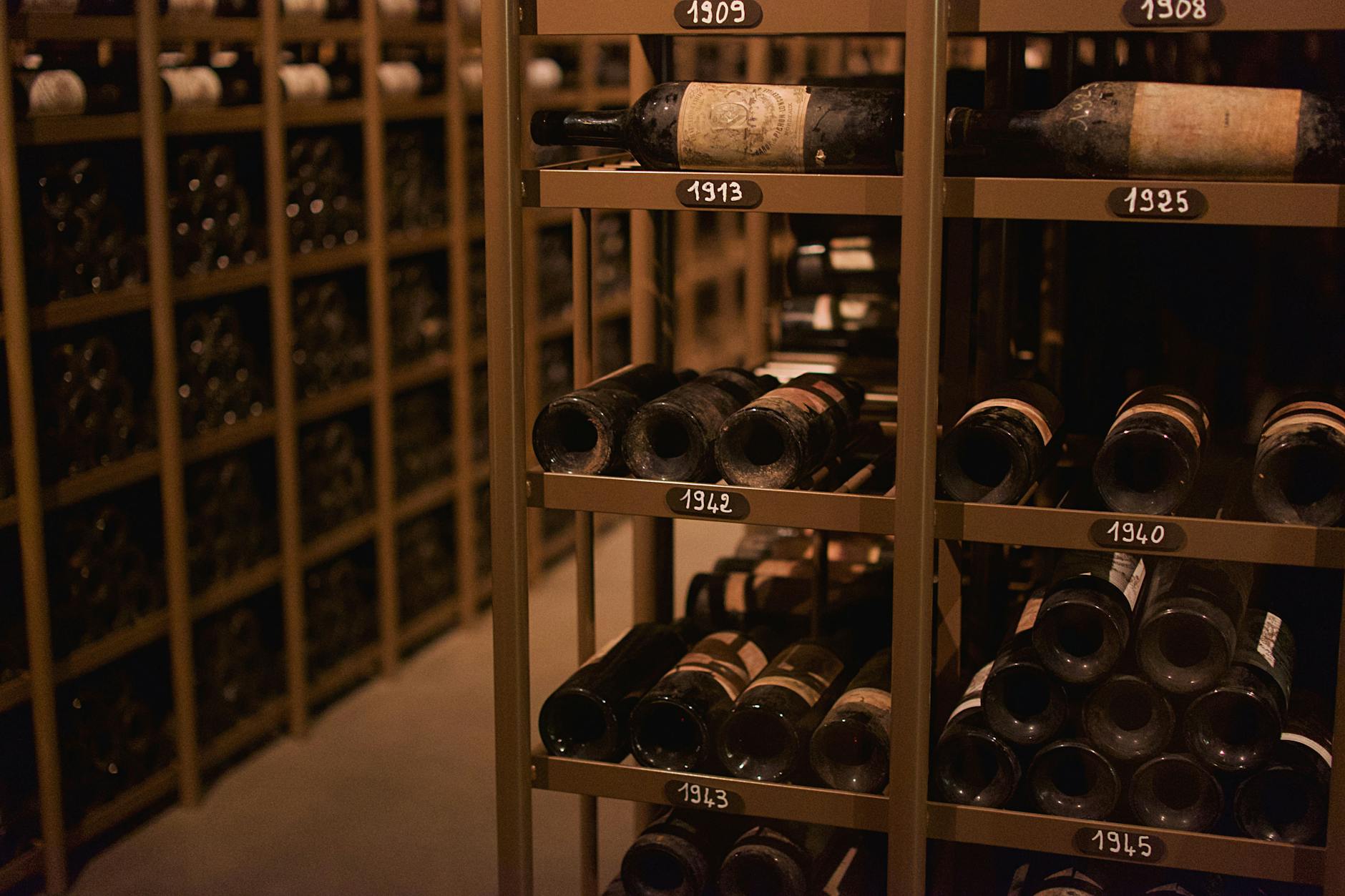
The Bordeaux 2025 en primeur campaign launches soon amid a softened secondary market. Asian collectors have structural pricing advantages via Hong Kong and should focus on top Pomerol and Pessac-Léognan estates where the 2024 vintage excelled, buying only at prices that reflect vintage reality.
TL;DR: The Bordeaux 2025 en primeur campaign is approaching, arriving against a backdrop of cautious optimism after years of price corrections. Asian collectors with long-term cellar strategies should watch châteaux pricing closely — early indications suggest producers will need to price aggressively to rebuild buyer confidence.
Why the Bordeaux 2025 En Primeur Campaign Matters to Collectors
The Bordeaux en primeur system — whereby collectors purchase wine as futures, typically 18 to 24 months before bottling — has long been one of the most structured entry points into fine wine investment. The 2025 campaign, expected to launch in late spring 2025 following the annual primeur week tastings in Bordeaux, arrives at a pivotal moment. After the record highs of the 2021 and 2022 campaigns, secondary market prices for top-flight Bordeaux have softened considerably, with the Liv-ex Bordeaux 500 index declining roughly 15–18% from its 2022 peak. For collectors who stayed on the sidelines during those frothy years, 2025 may represent a genuine re-entry point.
The 2024 vintage — which will be sold during this campaign — has drawn measured praise from critics. Harvest conditions were challenging, with significant mildew pressure across the Left Bank requiring rigorous selection in the vineyard. The result is a vintage of variable but potentially high quality at the very top estates, comparable in some respects to 2012 or 2014 rather than the blockbuster years of 2009, 2010, or 2022. That context is critical: pricing must reflect the vintage's character, not the châteaux's ambitions.
What Are the Key Price Benchmarks Collectors Should Track?
Serious collectors will be anchoring their decisions to specific reference points. Château Pétrus 2023, released en primeur at approximately £3,200 per bottle in bond, currently trades on the secondary market at around £3,050 — a marginal decline that underscores how even the most prestigious names have not been immune to broader market softening. Château Margaux 2022 released at roughly £650 per bottle and has since traded between £580 and £620. These figures matter because they set the ceiling of expectation for 2024 pricing: châteaux that attempt to match or exceed 2022 release prices on a lesser vintage will likely face resistance from both merchants and collectors.
The sweet spot in the 2025 campaign is likely to be found among the second and third growths, as well as the so-called super-seconds — estates like Léoville-Las Cases, Pichon Baron, and Ducru-Beaucaillou — where quality-to-price ratios tend to be more compelling than at the First Growth level. Collectors building a diversified Bordeaux cellar should allocate accordingly, rather than concentrating solely on Lafite or Mouton, whose brand premiums often outpace investment fundamentals.
Why Asian Collectors Hold Particular Leverage in This Market
Asia — and Hong Kong in particular — remains the world's most important re-export hub for fine Bordeaux. Since Hong Kong abolished wine duties in 2008, the city has cemented its role as the gateway through which Bordeaux flows into mainland China, Singapore, Taiwan, and beyond. At Christie's Hong Kong and Sotheby's Hong Kong, top-lot Bordeaux regularly achieves hammer prices 10–20% above equivalent London results, reflecting the depth of demand in the region. A case of Château Lafite Rothschild 2010, for instance, achieved HK$280,000 (approximately £28,500) at a 2023 Hong Kong auction — a figure that would have been considered exceptional in any other market.
That pricing power gives Asian collectors genuine leverage during the en primeur window. Buying direct through reputable négociants or UK merchants in bond — with storage at a London City Bond or similar facility — and then either holding for long-term appreciation or routing bottles through Hong Kong for eventual sale gives collectors a structurally advantageous position. Currency dynamics also play a role: with sterling remaining relatively weak against the Hong Kong dollar and Singapore dollar, the effective cost of purchasing en primeur from UK-based merchants is currently more favourable than it was in 2021 or 2022.
How to Approach the 2025 Campaign Strategically
The most disciplined collectors will resist the temptation to buy broadly and instead focus on a short list of estates where the 2024 vintage genuinely excels. Early critical indications point to strong performances from Pomerol and Saint-Émilion, where the clay soils helped buffer against the difficult weather conditions. Pétrus, Le Pin, and Vieux Château Certan are names worth watching closely when scores and release prices are confirmed. On the Left Bank, Margaux and Pessac-Léognan reportedly fared better than Pauillac, suggesting collectors might find relative value in estates such as Château Haut-Brion and Domaine de Chevalier.
Provenance and storage documentation remain non-negotiable for any serious investment purchase. Ensure all en primeur acquisitions are held in a temperature-controlled bonded warehouse with full chain-of-custody records — this is not merely best practice but a prerequisite for achieving top prices at auction. Hong Kong auction houses have become increasingly rigorous about provenance verification, and a bottle with an unbroken in-bond record from a reputable UK merchant will always command a premium over one with a fragmented storage history.
Frequently Asked Questions
What is Bordeaux en primeur and how does it work for investors?
En primeur is a system where collectors purchase Bordeaux wine as futures, typically six months after harvest and 18–24 months before the wine is bottled and shipped. Buyers pay upfront at a release price set by the château, with the expectation that the wine will appreciate in value by the time it is physically delivered. The investment thesis depends on the vintage quality, the estate's reputation, and market demand at the time of eventual sale or consumption.
Is the 2024 Bordeaux vintage worth buying en primeur?
The 2024 vintage is considered a selective rather than universally great year. Significant mildew pressure during the growing season meant that only estates with rigorous vineyard management produced outstanding wines. Top estates in Pomerol and Pessac-Léognan appear to have performed best. Collectors should wait for confirmed critic scores before committing, and should only buy at prices that reflect the vintage's character rather than paying 2022-equivalent premiums.
Which Bordeaux châteaux offer the best investment value for Asian collectors?
Historically, the First Growths — Lafite, Mouton, Margaux, Haut-Brion, and Latour — have delivered the most reliable long-term appreciation and auction liquidity in Asian markets. However, value-conscious collectors often find better price-to-quality ratios among the super-seconds such as Léoville-Las Cases, Ducru-Beaucaillou, and Pichon Baron. Pomerol icons like Pétrus and Le Pin command extraordinary premiums but have demonstrated consistent demand at Hong Kong and Singapore auctions.
How should Bordeaux en primeur purchases be stored for maximum investment value?
All investment-grade en primeur purchases should remain in a UK or European bonded warehouse until the collector is ready to sell or ship. This preserves the in-bond provenance record, which is a significant factor in achieving top hammer prices at auction. Transferring wine to a private cellar — even a well-maintained one — can reduce perceived provenance integrity and therefore auction value. When shipping to Hong Kong or Singapore, use only specialist fine wine logistics companies with temperature-controlled containers.
How does Hong Kong's zero wine duty policy benefit Bordeaux collectors in Asia?
Since 2008, Hong Kong has charged zero import duty on wine, making it the most cost-efficient hub for fine wine trading in Asia. This policy has attracted the world's major auction houses and created a deep, liquid secondary market for Bordeaux. Collectors based in mainland China, Taiwan, or Southeast Asia frequently route their purchases through Hong Kong to take advantage of this duty-free status and the concentration of specialist merchants, storage facilities, and auction expertise in the city.
🥃 Building a whisky cask collection? Whisky Cask Club curates rare Scottish casks for private collectors across Asia.