Caberlot is a near-impossible-to-find Tuscan wine from a single estate, made from a unique Cabernet Franc–Merlot crossing. Fewer than 3,500 bottles are made annually. Top vintages fetch up to €900 per bottle at auction and have appreciated 40% since release.
What is Caberlot? The Rarest Cult Grape in Tuscany
Caberlot is one of the rarest collectible wines in the world, and for serious Asian collectors building cellar-worthy portfolios, it represents exactly the kind of provenance-rich, ultra-limited asset that commands attention. Produced from a single vineyard in Tuscany, this mysterious crossing of Cabernet Franc and Merlot exists in quantities so small that fewer than 3,000 bottles are released in any given vintage — a figure that makes even the most allocated Burgundy look abundant by comparison. At recent European auctions, single bottles of Caberlot from top vintages have fetched between €400 and €900, with full cases from exceptional years like 2016 and 2019 crossing the €8,000 mark at specialist wine auctions in London and Geneva.
The grape itself was discovered almost by accident. In the early 1980s, Italian agronomist and landowner Pier Mario Cavallari identified an unusual vine growing on his Il Carnasciale estate in the Valdarno di Sopra zone, east of Florence. Genetic analysis later confirmed it to be a natural crossing of Cabernet Franc and Merlot, though the precise origin remains debated among ampelographers. Cavallari recognised its singular character and quietly began producing a monovarietal wine from it — a wine that would eventually attract a devoted following among collectors in Europe, Japan, and increasingly across Hong Kong and Singapore.
Provenance and the Il Carnasciale Estate
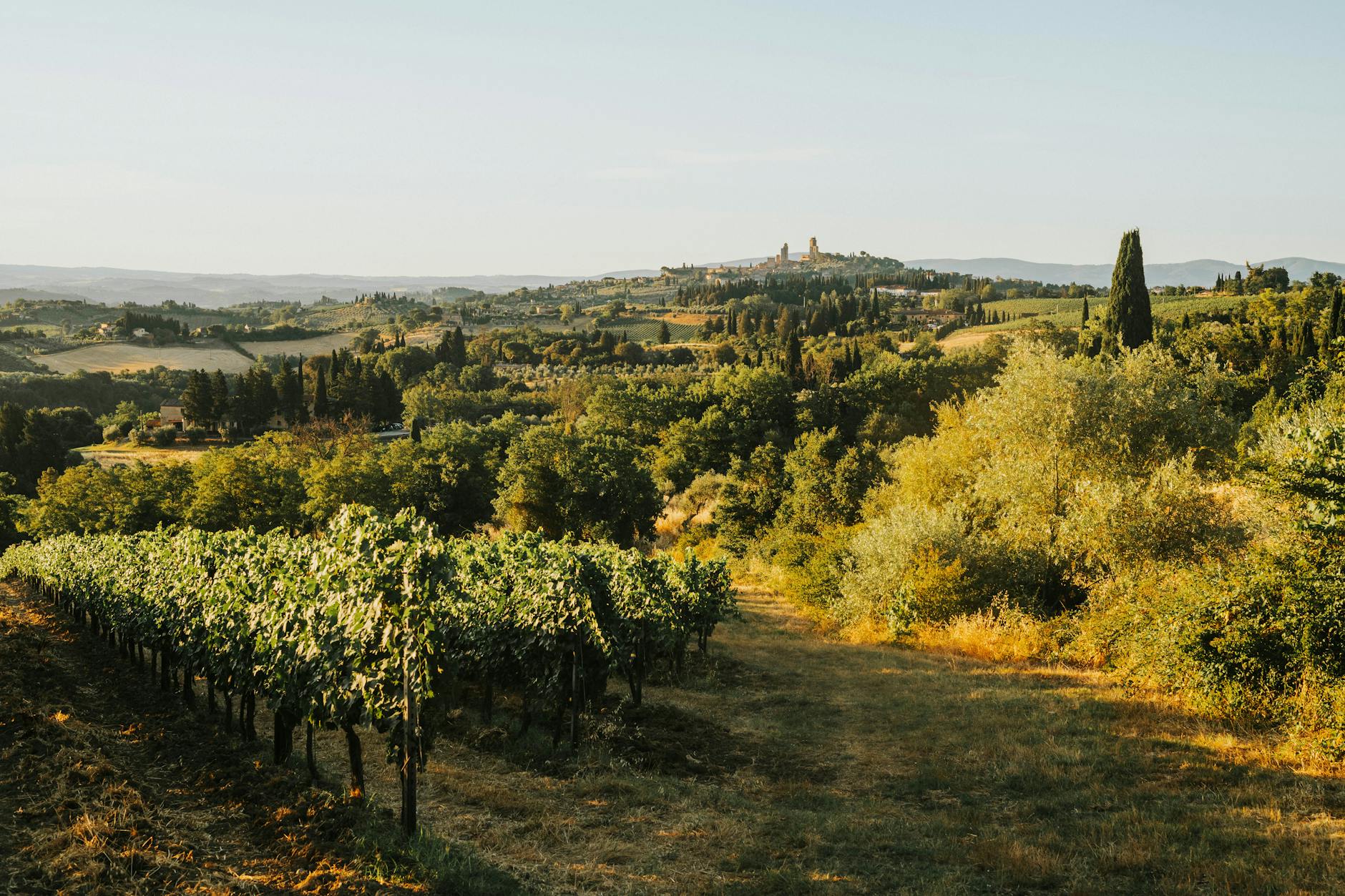
The entire world supply of Caberlot wine originates from Il Carnasciale, a small estate of approximately 4.5 hectares situated in the hills above Mercatale Valdarno. Pier Mario Cavallari ran the estate with meticulous attention until his death, after which his son Beppe Rampini took over stewardship, maintaining the same uncompromising approach to low yields and minimal intervention. The estate produces just one wine under the Caberlot label, and annual production has historically hovered between 2,000 and 3,500 bottles depending on vintage conditions — numbers that place it firmly in the micro-production category alongside names like Masseto and Pergole Torte.
The wine is aged in French oak barriques for approximately 18 months before bottling, with no filtration. Vintages released to market typically spend an additional year in bottle before shipment. This extended élevage means that collectors purchasing on release are already receiving a wine with meaningful bottle age — a quality that enhances both immediate drinkability and long-term cellaring potential. The 2016 vintage, widely regarded as the finest in recent memory, was rated 97 points by a leading international critic and has appreciated roughly 40% in secondary market value since its initial release price of approximately €280 per bottle.
Why Asian Collectors Are Taking Notice
The Asian fine wine market, centred on Hong Kong as the region's primary auction hub, has long demonstrated appetite for scarcity-driven, story-rich bottles. Caberlot ticks every box that sophisticated collectors in Tokyo, Singapore, and Taipei look for: a compelling origin narrative, verifiable single-estate provenance, critical acclaim from respected voices, and a production volume so constrained that availability on the secondary market is genuinely unpredictable. Christie's Hong Kong and Zachys Asia have both seen increased bidding activity on Italian cult wines in the past three years, with Super Tuscans and micro-production Valdarno bottles appearing more frequently in dedicated wine sessions.
For collectors who entered Masseto or Sassicaia early and have watched those wines appreciate 200–300% over a decade, Caberlot represents a comparable opportunity at an earlier stage of international recognition. The wine is not yet widely distributed across Asia, which means acquisition typically requires either direct relationships with specialist European négociants or purchase through auction. That friction is itself a collector signal: wines that are difficult to source tend to hold value more reliably than those with broad retail availability. Importers in Japan and Hong Kong have begun allocating small quantities, but demand consistently outpaces supply.
Tasting Profile and Cellar Strategy
Caberlot occupies a stylistic position unlike anything else in Tuscany. It carries the structural elegance of Cabernet Franc — fine tannins, lifted acidity, violet and graphite aromatics — married to the plush mid-palate weight of Merlot. The result is a wine of unusual precision and length, with top vintages showing the capacity to age gracefully for 20 years or more. Collectors who have opened older vintages from the 1990s describe tertiary complexity — dried herbs, iron, cedar, dark cherry — that rivals aged Pomerol at a fraction of the price.
For cellar strategy, specialists recommend acquiring across multiple vintages to build vertical depth, as vertical sets of Caberlot command a significant premium at auction over individual bottles. A vertical of five consecutive vintages in original wooden case has sold for upwards of €6,500 at European specialist auctions. Given the wine's negligible retail footprint in Asia, collectors who secure allocation now are positioning themselves ahead of what is likely to be a sharp increase in regional recognition as Italian fine wine continues its upward trajectory in Hong Kong auction results.
Frequently Asked Questions
What grape variety is Caberlot made from?
Caberlot is made from a rare natural crossing of Cabernet Franc and Merlot discovered on the Il Carnasciale estate in Tuscany. It is produced as a monovarietal wine and is found nowhere else in the world.
How many bottles of Caberlot are produced each year?
Annual production typically ranges between 2,000 and 3,500 bottles depending on vintage conditions, making it one of the most limited-production wines in Italy and globally.
What is the current market value of Caberlot?
Single bottles from top vintages such as 2016 and 2019 have sold for between €400 and €900 at auction. Full cases from exceptional years have crossed the €8,000 mark at specialist auctions in London and Geneva. The 2016 vintage has appreciated approximately 40% since its release price of around €280 per bottle.
Where can Asian collectors buy Caberlot?
Caberlot is not widely distributed in Asia. Collectors typically acquire it through specialist European négociants, direct estate allocation, or auction houses such as Christie's Hong Kong and Zachys Asia, where Italian cult wines appear with increasing frequency.
How long can Caberlot age in the cellar?
Top vintages of Caberlot are considered capable of ageing gracefully for 20 years or more. Older vintages from the 1990s have shown impressive tertiary complexity, drawing comparisons to aged Pomerol from the Right Bank of Bordeaux.
🥃 Building a whisky cask collection? Whisky Cask Club curates rare Scottish casks for private collectors across Asia.