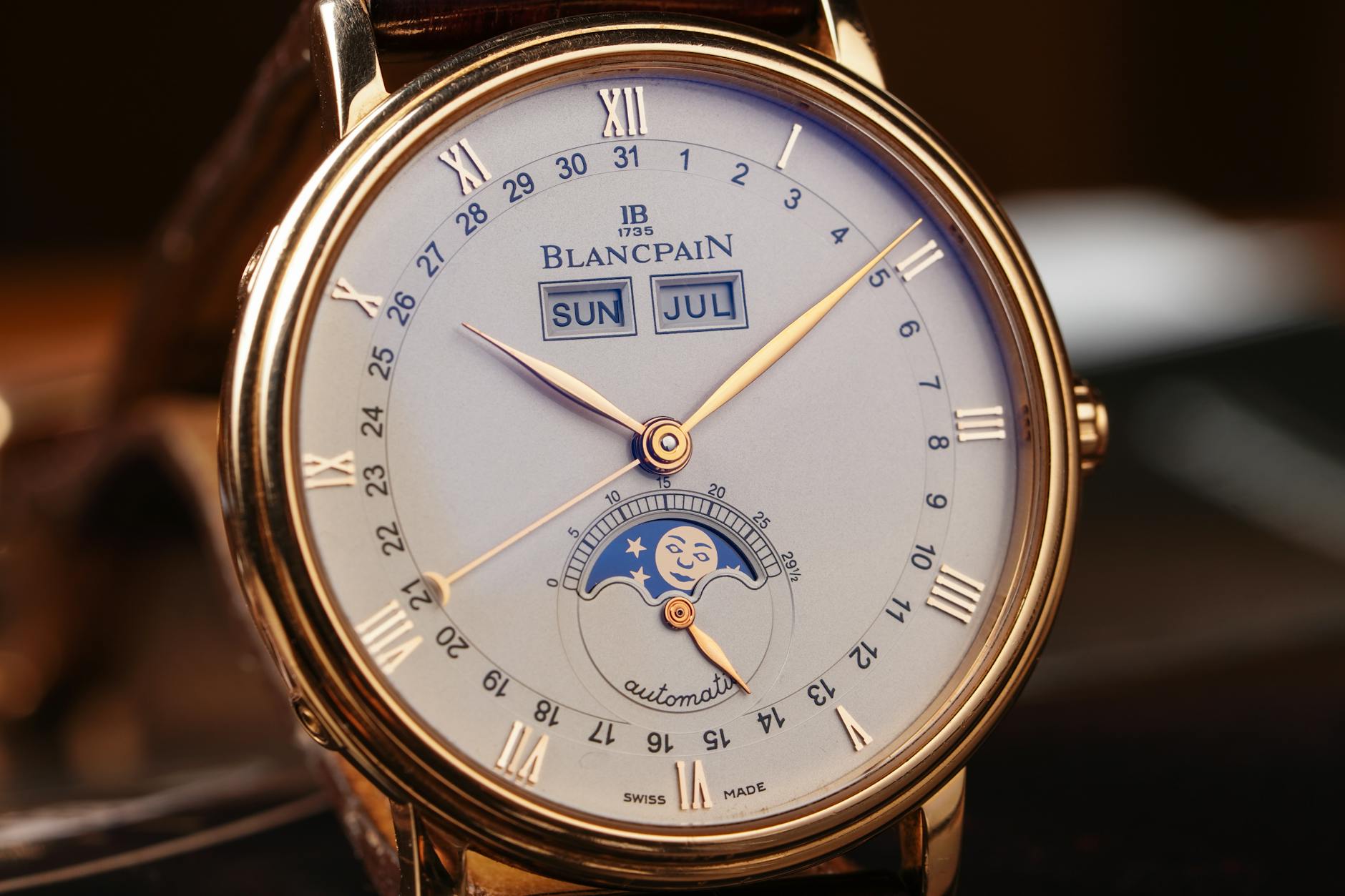
The Girard-Perregaux Minute Repeater Flying Bridges, priced at CHF 280,000, combines 155 years of Three Bridges heritage with a cathedral gong minute repeater. Fewer than 20 pieces made annually. Strong secondary market performance in Hong Kong and Singapore makes it a credible portfolio anchor.
The Girard-Perregaux Minute Repeater Flying Bridges: A Masterpiece of Sound and Sight
The Girard-Perregaux Minute Repeater Flying Bridges watch stands as one of the most compelling acoustic and visual achievements in contemporary haute horlogerie. Launched as a direct evolution of the maison's legendary Three Bridges architecture — a design that dates back to 1867 and earned a gold medal at the Paris Universal Exposition — this new execution pairs a fully functional minute repeater complication with the brand's signature skeletonised movement suspended on three parallel gold bridges. Retail pricing sits at approximately CHF 280,000 (roughly USD 310,000 or HKD 2.42 million), placing it firmly within the rarefied tier of museum-grade wristwatches that serious collectors in Hong Kong, Singapore, and Tokyo actively pursue.
What Is the Three Bridges Architecture and Why Does It Matter?
The Three Bridges movement is not merely an aesthetic choice — it is a structural philosophy that Girard-Perregaux has refined across more than 150 years. The three arrow-shaped bridges, traditionally crafted in gold, hold the gear train in a linear configuration that is both mechanically disciplined and visually dramatic. In the Minute Repeater Flying Bridges iteration, these bridges are executed in titanium with a skeletonised finish, allowing the wearer to observe the full depth of the movement in motion. The dial side reveals the flying tourbillon cage, the repeater hammers, and the cathedral gongs — all suspended in apparent mid-air against a sapphire crystal caseback and dial.
What distinguishes this watch from comparable minute repeaters in the CHF 200,000–400,000 bracket — including offerings from Patek Philippe, A. Lange and Söhne, and Audemars Piguet — is the acoustic engineering. Girard-Perregaux worked extensively on the resonance of the case, a 44mm titanium construction, to amplify the cathedral gong strike. The result is a tone that collectors and watchmakers who have handled the piece describe as unusually clear and sustained, with a bell-like decay that outperforms many competitors at this price point.
Provenance, Rarity, and Production Numbers
Girard-Perregaux has not published an official limited edition figure for this reference, but industry sources and authorised retailers confirm that annual production is measured in the low double digits — likely fewer than 20 pieces per year globally. This scarcity is inherent to the complication itself: minute repeaters require hand-fitting and acoustic tuning by a small number of specialist watchmakers, a process that cannot be meaningfully accelerated without compromising quality. The brand's La Chaux-de-Fonds manufacture, established in 1791, houses the entire production chain, from movement construction to case finishing and acoustic calibration.
The Three Bridges design itself carries significant provenance weight. The original 1867 pocket watch movement is held in the Girard-Perregaux museum and has been exhibited internationally. Collectors who acquire a modern Three Bridges piece are, in a meaningful sense, purchasing a direct descendant of that award-winning movement — a chain of custody that spans over 155 years of continuous manufacture. For Asian collectors who place high value on heritage and lineage, this provenance narrative is unusually strong compared to newer maisons or fashion-house watchmakers.
Why Asian Collectors Should Be Watching This Reference
The secondary market for grand complication watches with strong visual architecture has shown consistent appreciation in Asian auction rooms. At Christie's Hong Kong's November 2023 Important Watches sale, a Girard-Perregaux Tourbillon with Three Gold Bridges in platinum achieved HKD 1.38 million against a pre-sale estimate of HKD 800,000–1.2 million, representing a hammer premium of roughly 15% above the high estimate. While that reference differs from the Minute Repeater Flying Bridges, it demonstrates sustained collector appetite in the region for GP's signature architecture. The addition of a minute repeater — historically the most labour-intensive and prestigious of all watch complications — only strengthens the case for long-term value retention.
Japanese collectors in particular have a deep cultural appreciation for mechanical sound, and the minute repeater's acoustic performance has historically driven strong demand in Tokyo's pre-owned market. In Singapore and Hong Kong, where watch investment literacy is high and access to authorised dealers is strong, this reference occupies a meaningful gap: it offers the prestige of a grand complication, the visual drama of a skeletonised movement, and the brand heritage of a manufacture that predates most of its competitors. For collectors building a focused haute horlogerie portfolio, the Minute Repeater Flying Bridges represents a credible anchor piece.
Collection-Building Insight
For the serious collector, the strategic question is not whether to acquire this watch, but when and through which channel. Authorised dealer allocation for this reference is extremely limited, and waiting lists in Hong Kong and Singapore are reportedly in excess of 18 months. The secondary market, where available, commands premiums of 10–20% above retail, consistent with the behaviour of other low-production grand complications from established Swiss maisons. Collectors who can access retail allocation should treat it as a priority, as the combination of acoustic complication, architectural movement design, and deep manufacture heritage creates a convergence of factors that historically supports appreciation over a five-to-ten-year holding horizon.
🥃 Building a whisky cask collection? Whisky Cask Club curates rare Scottish casks for private collectors across Asia.
Frequently Asked Questions
What is the retail price of the Girard-Perregaux Minute Repeater Flying Bridges?
The watch retails at approximately CHF 280,000, equivalent to around USD 310,000 or HKD 2.42 million at current exchange rates. Pricing may vary slightly by market and authorised dealer.
How many pieces of the Minute Repeater Flying Bridges are produced each year?
Girard-Perregaux has not published an official production figure, but industry sources indicate annual output is likely fewer than 20 pieces globally, due to the intensive hand-fitting and acoustic tuning required for minute repeater movements.
What is the history behind the Three Bridges design?
The Three Bridges architecture was introduced by Girard-Perregaux in 1867 and won a gold medal at the Paris Universal Exposition that year. The design uses three parallel arrow-shaped bridges to hold the gear train, and has been continuously refined by the manufacture in La Chaux-de-Fonds for over 155 years.
How has the Girard-Perregaux Three Bridges performed at Asian auctions?
A Girard-Perregaux Tourbillon with Three Gold Bridges in platinum sold at Christie's Hong Kong in November 2023 for HKD 1.38 million, exceeding its high estimate of HKD 1.2 million by approximately 15%, indicating strong and consistent collector demand in the region.
Why do minute repeater watches command such high prices?
Minute repeaters are considered the most complex and labour-intensive of all watch complications. They require specialist watchmakers to hand-fit and acoustically tune the striking mechanism, a process that severely limits production volume and ensures that each piece represents a significant investment of skilled craft time.