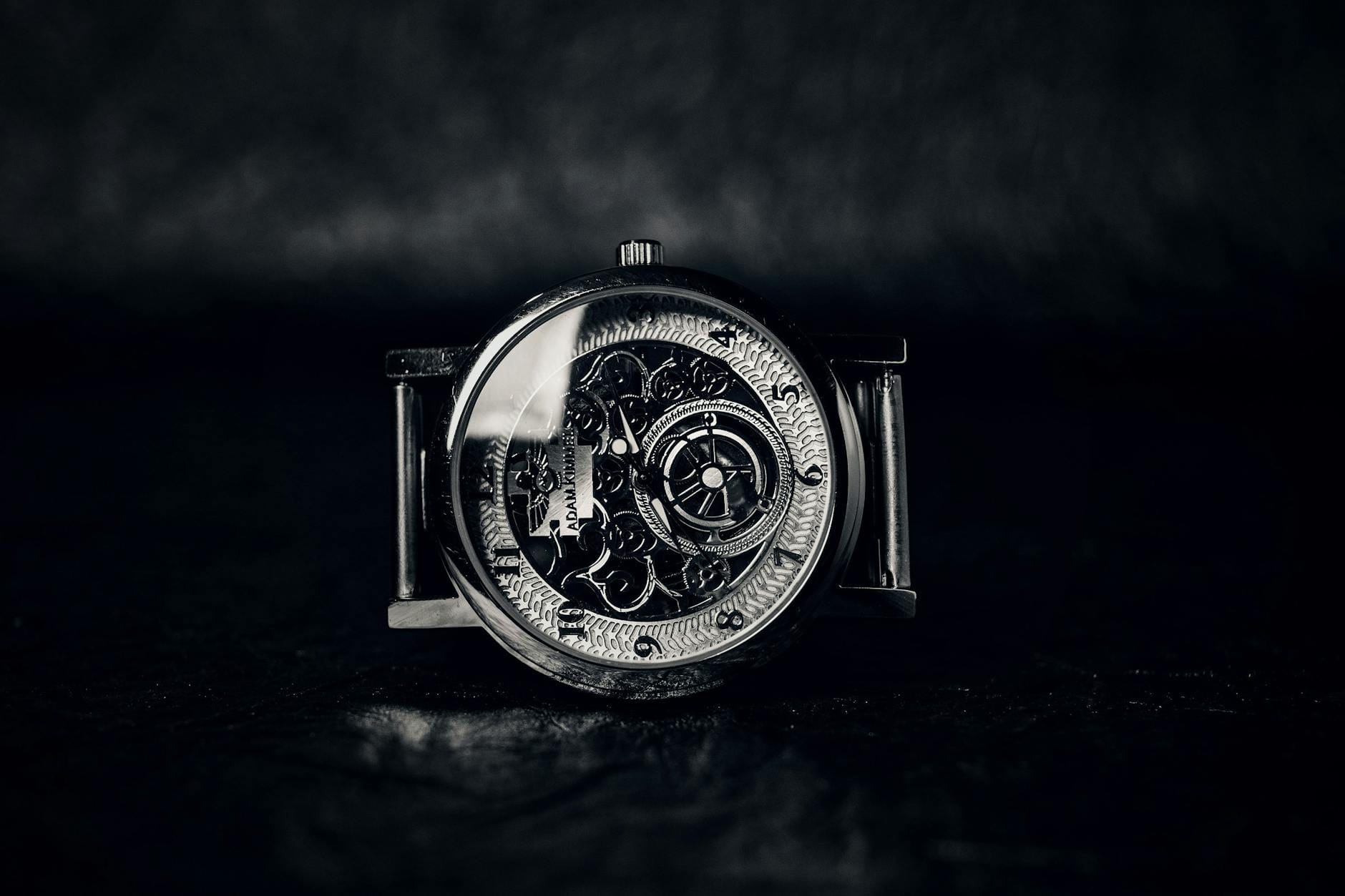
England's watchmaking tradition — from Tompion's royal commissions to Daniels's £3.2M auction record — is underweighted in Asian collections. With extreme scarcity, traceable provenance, and strong appreciation data, English horology deserves serious collector attention.
English Watchmaking: The Forgotten Giant of Horology
English watchmaking rarely dominates the conversation when serious collectors debate the great horological traditions, yet the country's contribution to the craft is arguably unmatched in terms of foundational innovation. For Asian collectors who have built portfolios around Swiss precision and Japanese finishing, understanding the depth of English watchmaking history is not merely academic — it is essential provenance intelligence. A George Daniels Space Traveller I pocket watch sold at Sotheby's London in 2019 for £3,265,000, more than four times its pre-sale high estimate of £700,000, a result that sent a clear signal to the global market: English horology commands extraordinary premiums when provenance and rarity align.
The Founders Who Built the Language of the Watch
The story of English watchmaking begins in earnest with Thomas Tompion, born in 1639 and widely regarded as the father of English clockmaking. Working in London during the late seventeenth century, Tompion produced over 5,500 clocks and watches in his lifetime, collaborating directly with scientist Robert Hooke on the application of the balance spring to portable timekeepers. His instruments were acquired by royalty across Europe, and surviving examples today carry provenance chains that read like a who's who of aristocratic collecting. A Tompion bracket clock with documented royal ownership has appeared at Christie's with estimates beginning at £200,000, reflecting both the rarity of his work and the depth of collector demand.
Thomas Mudge followed in the eighteenth century with what many horologists consider the single most important mechanical invention in watchmaking history: the lever escapement, developed around 1754. This mechanism, which remains the foundation of virtually every mechanical watch produced today, was a purely English contribution. Mudge made only a handful of watches incorporating his invention, and those that survive are museum-grade objects. John Arnold, another English master, then pioneered the marine chronometer and the modern hairspring, with his work directly enabling accurate oceanic navigation — a contribution that shaped global trade routes and, consequently, the fortunes of Asian merchant empires.
The Modern Custodians: Daniels, Smith, and the English Revival
The twentieth century saw English watchmaking decline sharply against Swiss industrialisation, but George Daniels — watchmaker, author, and arguably the greatest horological mind of the modern era — single-handedly revived its credibility. Daniels developed the co-axial escapement, a mechanism later licensed by Omega and deployed across millions of watches, yet he produced only around 30 watches by hand during his career. Each one is a collectible of the highest order. His apprentice, Roger Smith, continues working on the Isle of Man today, producing approximately six watches per year with a retail price starting at £65,000 and a waiting list that stretches years. Derek Pratt, another significant figure in this lineage, contributed to the restoration of horological heritage pieces and trained a generation of precision makers.
For Asian collectors, the appeal of this tradition is multifaceted. First, the scarcity figures are genuinely extreme — Roger Smith's annual output of six pieces compares with a Swiss manufacture producing tens of thousands annually. Second, the provenance chains on English watches are often meticulously documented through guild records, estate archives, and museum loans, giving collectors the kind of paper trail that supports long-term value appreciation. Third, auction results confirm the trajectory: English independent watchmaking has seen consistent double-digit percentage gains at major houses over the past decade, with Daniels pieces appreciating over 400% from their last private sale prices to current auction estimates.
Key Makers and Their Market Benchmarks
- Thomas Tompion (1639–1713): Surviving pocket watches, est. £150,000–£400,000 at auction depending on condition and provenance.
- George Daniels (1926–2011): Hand-made watches, last major result £3,265,000 (Space Traveller I, Sotheby's 2019); co-axial pocket watches from £500,000+.
- Roger Smith (b. 1970): Current retail from £65,000; secondary market premiums of 30–50% reported on limited series.
- John Arnold (1736–1799): Marine chronometers, est. £20,000–£80,000 depending on serial number and naval documentation.
- Bremont: The contemporary English brand producing limited editions from £3,000–£30,000, with Wright Brothers and Martin-Baker series commanding premiums on resale.
Why Asian Collectors Should Pay Attention Now
The Asian collector market has historically concentrated on Swiss manufactures — Patek Philippe, A. Lange and Söhne, and independent makers from Geneva and the Vallée de Joux. English watchmaking represents an underweighted category in most Asian portfolios, which is precisely where opportunity exists. Auction houses in Hong Kong and Singapore have begun featuring English horology more prominently in their specialist watch sales, with Phillips Hong Kong noting increased bidder registration from mainland Chinese and Southeast Asian collectors for English independent pieces in 2022 and 2023. The combination of extreme scarcity, documented provenance, and a narrative of foundational invention gives English watches a compelling story — and in the collectibles market, story drives price.
Building a position in English watchmaking now, before the category achieves the mainstream recognition it deserves among Asian collectors, mirrors the strategic thinking that rewarded early buyers of Daniels pieces in the 1990s. Whether you are acquiring a Tompion fragment for its historical weight, a Roger Smith Series 4 for its living craftsmanship, or a documented Arnold chronometer for its maritime provenance, the English tradition offers depth that few collecting categories can match. The numbers support the thesis, the provenance is traceable, and the supply is genuinely finite.
Frequently Asked Questions
What is the most valuable English watch ever sold at auction?
The George Daniels Space Traveller I pocket watch holds the record, selling at Sotheby's London in October 2019 for £3,265,000 — more than four times its high pre-sale estimate of £700,000. The watch features Daniels's hand-made movement and his celebrated co-axial escapement, and it was one of only two Space Traveller watches he ever produced.
Who is Roger Smith and why do collectors value his watches?
Roger Smith is a British watchmaker based on the Isle of Man and the direct apprentice of George Daniels. He produces approximately six watches per year entirely by hand, with retail prices starting at £65,000. His watches are considered among the most collectible contemporary pieces in independent horology, with secondary market premiums of 30–50% reported on limited series.
What did Thomas Mudge invent and why does it matter to collectors?
Thomas Mudge invented the lever escapement around 1754, a mechanism that remains the foundation of virtually every mechanical watch produced today. Because Mudge made only a small number of watches incorporating this invention, surviving examples are museum-grade rarities. Their importance to horology gives them permanent institutional and collector demand.
Are English watches a good investment for Asian collectors?
English independent watchmaking is an underweighted category in most Asian collector portfolios, which creates opportunity. Auction results over the past decade show consistent appreciation, with Daniels pieces gaining over 400% from earlier private sale prices to current estimates. The combination of extreme scarcity, documented provenance, and foundational historical narrative supports long-term value.
Where can Asian collectors acquire English horology pieces?
Major auction houses including Sotheby's, Christie's, and Phillips all handle English horology in their specialist watch sales, with Phillips Hong Kong and Christie's Hong Kong increasingly featuring English independent pieces. For new Roger Smith watches, the waiting list is managed directly through his Isle of Man workshop. Bremont, the contemporary English brand, has authorised retailers across Hong Kong, Singapore, and Tokyo.
🥃 Building a whisky cask collection? Whisky Cask Club curates rare Scottish casks for private collectors across Asia.