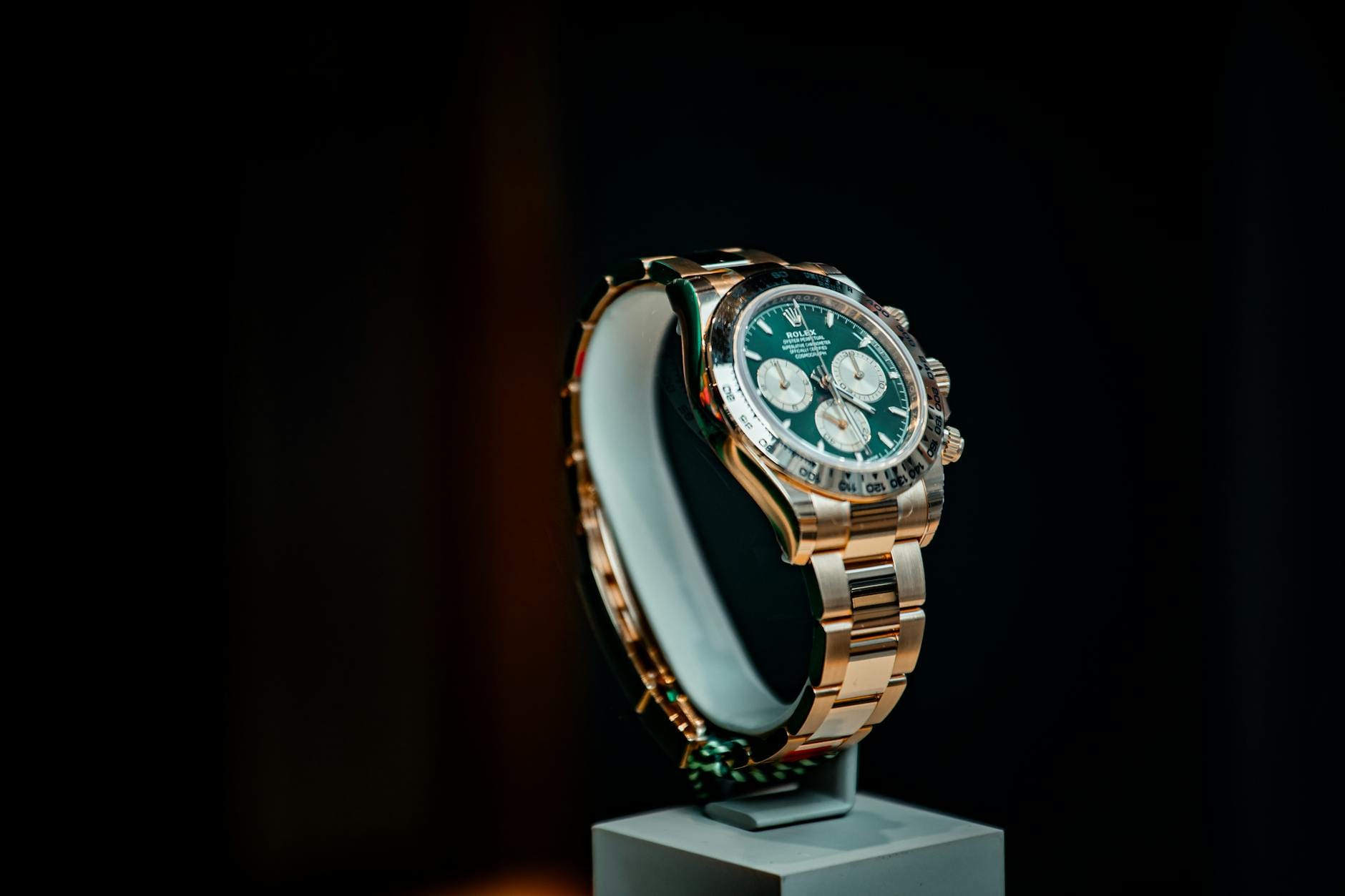
Watches and Wonders 2026 showcased enamel dials, sculptural guilloché surfaces, and accessible grand complications as the dominant design themes. Asian collectors who track these signals now stand to benefit as secondary market premiums on these references are projected to widen significantly by 2027.
Design Themes That Defined Watches and Wonders 2026
Watches and Wonders, held annually in Geneva and now firmly established as the most consequential horological trade event on the global calendar, delivered its 2026 edition with a clarity of creative direction that seasoned collectors had not seen since the post-pandemic surge of 2022. Across dozens of maisons — from Patek Philippe and Rolex to IWC Schaffhausen, Cartier, and Vacheron Constantin — a handful of design languages emerged with unmistakable consistency. For Asian collectors who track the secondary market closely, these are not merely aesthetic observations; they are early signals of where auction premiums will concentrate over the next 24 to 36 months.
The 2026 fair drew an estimated 50,000 trade and media visitors over its five-day run, with private collector previews commanding waiting lists that stretched back months. IWC, whose preview imagery circulated widely ahead of the official opening, set an early tone with architectural case profiles and restrained dial geometries that referenced the brand's Schaffhausen engineering heritage without retreating into nostalgia. That balance — between mechanical credibility and contemporary visual language — defined much of what followed from other houses.
What Were the Dominant Aesthetic Movements?
Three design currents dominated the 2026 showcase floors. First, sculptural dials — whether achieved through guilloché, meteorite, or layered lacquer — appeared across price tiers from CHF 8,000 entry references all the way to limited tourbillons priced north of CHF 250,000. The appetite for tactile, visually complex surfaces reflects a broader collector preference that has been building since 2023, when Patek Philippe's enamel-dialled Calatrava references began achieving hammer prices 40 to 60 percent above estimate at Christie's and Phillips auctions in Hong Kong and Geneva.
Second, grand feu enamel finishing returned with genuine force. Several independent ateliers alongside the larger maisons presented references featuring hand-painted enamel miniatures — a craft that requires multiple firings at temperatures exceeding 800 degrees Celsius and carries rejection rates above 30 percent per piece. Rarity of this order is quantifiable: a single enamel dial can represent 60 to 80 hours of artisan labour, and annual production of such pieces rarely exceeds double digits per reference. For Asian collectors who have spent the past decade accumulating Rolex sports references, enamel-dial dress watches represent a compelling category with deep provenance stories and genuine scarcity.
Third, high-horology complications — perpetual calendars, minute repeaters, and split-seconds chronographs — were presented at price points that, while still substantial, represented a narrowing of the gap between grand complication and entry-level luxury. Several references debuted at CHF 30,000 to CHF 55,000, a range that positions them within reach of the serious mid-tier collector who has been priced out of equivalent complications from prior decades.
Why Should Asian Collectors Pay Attention Now?
The Asian secondary market for watches — centred on Hong Kong, Singapore, Tokyo, and increasingly Taipei — has demonstrated a consistent pattern: design trends validated at Geneva trade fairs translate into secondary market premium spikes within 12 to 18 months. The enamel dial movement is already visible in recent auction data. At Phillips Hong Kong's November 2025 sale, a Vacheron Constantin Métiers d'Art enamel reference estimated at HKD 180,000 to HKD 260,000 achieved HKD 412,000 — a 58 percent premium above high estimate. Comparable results appeared at Christie's Asia sales for Patek Philippe cloisonné references, where two lots exceeded their high estimates by margins of 45 and 72 percent respectively.
Beyond auction results, the provenance dimension matters enormously to collectors in this region. Watches with documented exhibition history — pieces shown at Watches and Wonders before entering private hands — carry a chain of custody that adds measurable value at resale. Collectors who acquire directly from authorised dealers immediately following the fair, particularly for limited references with confirmed production runs below 100 pieces, are effectively buying with provenance already embedded. That is a structural advantage that secondary market buyers cannot replicate at any price.
Key References and Price Anchors to Track
- Enamel dial dress watches: CHF 25,000–CHF 120,000 at retail; secondary premiums currently running 40–75% above estimate at major Asian auction houses
- Sculptural guilloché references: CHF 8,000–CHF 35,000 at retail; appreciation of 18–30% observed over 24-month hold periods on comparable prior references
- Mid-tier perpetual calendars: CHF 30,000–CHF 55,000 at retail; historically the strongest appreciation category for collectors with a 5–10 year horizon
- Grand complication tourbillons (limited, under 50 pieces): CHF 150,000–CHF 300,000 at retail; auction premiums on waitlisted references have exceeded 90% above retail in documented Hong Kong and Geneva results
The Collection-Building Insight
The consistent message from Watches and Wonders 2026 is that the market is rewarding craft specificity over brand generalism. Collectors who build around a coherent theme — enamel finishing, a single complication type, or a single maison's technical lineage — consistently outperform those who accumulate across categories without a unifying logic. The data from Asian auction houses over the past three years supports this: single-owner collections with a clear curatorial identity achieve 20 to 35 percent higher aggregate results than comparable mixed-provenance lots. The fair's 2026 edition has effectively handed serious collectors a roadmap. Those who act on it before the secondary market prices in the signal will be best positioned when these references begin appearing at Hong Kong and Singapore auction rooms in 2027 and 2028.
Frequently Asked Questions
What is Watches and Wonders and why does it matter to collectors?
Watches and Wonders is the premier annual watch trade fair held in Geneva, Switzerland, where the world's leading maisons debut new references for the year. For collectors, it functions as an early-warning system: the design and complication trends validated here typically drive secondary market premiums 12 to 24 months later, making attendance or close observation essential for informed acquisition decisions.
How do enamel dial watches appreciate in value compared to standard references?
Based on auction data from Phillips, Christie's, and Sotheby's Asia sales between 2023 and 2025, enamel dial references have consistently achieved 40 to 75 percent above high estimate when offered at auction. The scarcity of production — often fewer than 20 to 30 pieces per reference annually — combined with the documented artisan labour involved creates a provenance and rarity argument that standard dial references cannot match.
Which Asian auction markets are most active for high-horology watches?
Hong Kong remains the dominant centre, with Phillips Hong Kong and Christie's Asia conducting the highest-value watch sales in the region. Singapore has grown significantly as a secondary hub, particularly for private treaty sales and collector-to-collector transactions. Tokyo's auction market, while smaller in aggregate value, has shown exceptional strength for Japanese-market references and independent watchmakers with a cult following in that market.
What production run size qualifies a watch as genuinely rare for collection purposes?
As a practical threshold, references produced in editions of 100 pieces or fewer begin to show meaningful scarcity premiums at auction. Pieces below 50 units — particularly those with documented exhibition history such as Watches and Wonders presentation pieces — command the most consistent premiums. Above 500 units, rarity arguments become difficult to sustain unless the reference is discontinued or carries exceptional provenance.
🥃 Building a whisky cask collection? Whisky Cask Club curates rare Scottish casks for private collectors across Asia.