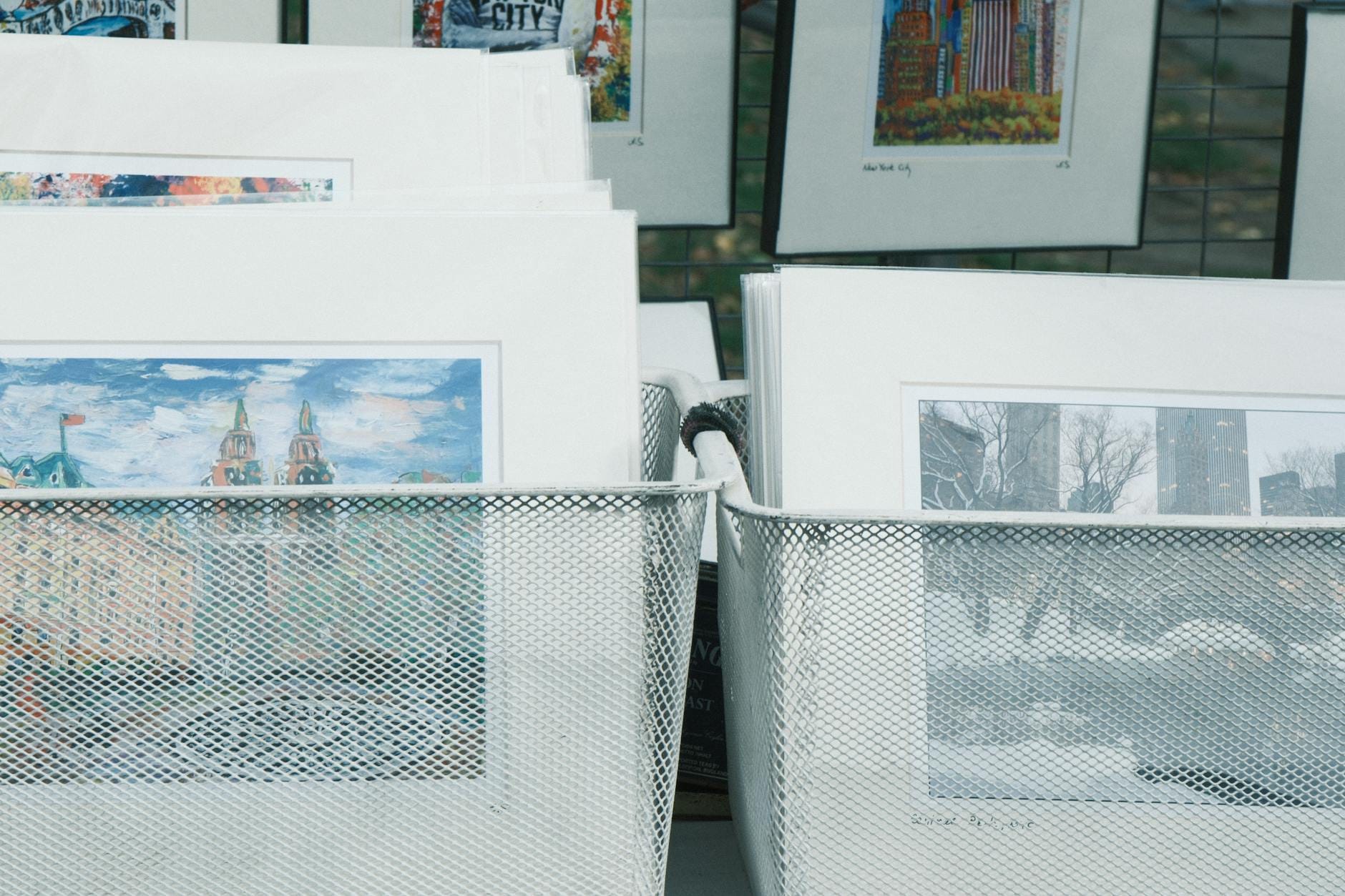
New York Art Week in May 2025 sets global price benchmarks. Asian collectors should focus on provenance quality, the $500K–$3M liquidity sweet spot, and works on paper as an undervalued entry point.
New York Art Week Will Test the Market's Momentum
New York Art Week arrives this May as one of the most closely watched stress tests the global art market has faced since the post-pandemic surge began cooling. Advisors and dealers operating across Asia and the West are watching bid levels, sell-through rates, and buyer demographics with unusual intensity. For serious Asian collectors — many of whom have been quietly building positions in blue-chip Western contemporary and postwar works — the week's results will either validate recent acquisitions or prompt a strategic reassessment of where capital should flow next.
What the Numbers Are Telling Us Right Now
The most recent major auction data provides useful context. At Christie's New York in November 2024, the postwar and contemporary evening sale achieved a combined total of approximately $214 million, with a sell-through rate of around 77% by lot — respectable, but notably down from the 90%-plus rates seen during the 2021 and 2022 bull run. Sotheby's comparable sale that same season landed near $190 million, with several high-estimate lots passing or being bought in, including a Jean-Michel Basquiat work estimated at $18–25 million that failed to find a buyer. These figures matter because they establish the floor from which May 2025 must now build.
For Asian collectors specifically, the performance of works by artists with strong institutional followings in Asia is worth tracking with precision. Yoshitomo Nara's works have consistently achieved premiums of 20–40% above low estimate at major Western houses when fresh-to-market provenance is established. A Nara canvas with clean single-owner provenance from a European collection — rather than a recycled Asian private sale — can command a meaningful premium. Similarly, works by Zao Wou-Ki with documented European exhibition history tend to outperform at Western houses by 15–25% compared to equivalent works sourced from Asian consignors, a provenance arbitrage that sophisticated collectors have been exploiting for over a decade.
Why Practicality Is Driving Buying Decisions
Multiple advisors working with high-net-worth Asian clients confirm that the mood entering New York Art Week is one of disciplined selectivity rather than speculative enthusiasm. The days of bidding 30% over estimate on a mid-career artist with three years of auction history are largely behind us. What buyers want now are works with verifiable exhibition records, institutional loan histories, and ideally, literature citations in major catalogue raisonnés. A work by Mark Rothko, for example, carries exponentially more weight when it appears in the 1998 National Gallery of Art retrospective catalogue and has passed through no more than two private hands since its original sale from the Marlborough Gallery in the 1960s.
Asian collectors — particularly those based in Hong Kong, Singapore, and increasingly Jakarta and Kuala Lumpur — are also factoring currency dynamics into their New York decisions. With the US dollar remaining relatively strong against several Asian currencies through early 2025, dollar-denominated acquisitions require sharper justification. Advisors recommend targeting works in the $500,000 to $3 million range where liquidity is strongest and the resale market in Asia is most active, rather than stretching into the $10 million-plus tier where exit options are narrower.
Key Works and Categories to Watch This Season
- Postwar American abstraction: Works by Franz Kline and Cy Twombly with pre-1980 provenance chains remain highly liquid across Asian secondary markets, with Twombly achieving consistent 10–18% annual appreciation over the past decade.
- Asian modernists at Western houses: Zao Wou-Ki oils with European provenance are expected to appear at both Christie's and Sotheby's; estimate ranges of $800,000–$2.5 million are anticipated for mid-sized canvases from his 1960s period.
- Works on paper: An undervalued category gaining traction — drawings and works on paper by Basquiat, Haring, and Warhol in the $150,000–$600,000 range offer entry points with strong Asian buyer appetite and lower carrying costs than large canvases.
- Photography with exhibition provenance: Cindy Sherman and Andreas Gursky prints with documented museum exhibition histories are attracting attention from collectors diversifying beyond painting.
What Asian Collectors Should Take Away From This Week
New York Art Week is not simply a sales event — it is a provenance-generation machine. Works that sell publicly at Christie's, Sotheby's, or Phillips this week immediately acquire a new layer of auction history that can be leveraged in future resales, particularly in Asia where auction provenance carries significant weight with buyers. Collectors attending or bidding remotely should think of each acquisition not only in terms of aesthetic value but as a provenance asset that will either appreciate or depreciate based on the quality of its custody chain going forward.
The smartest play entering this week is patience combined with precision. Set hard limits by category, prioritise works with at least two prior auction appearances to establish price history, and avoid any lot where the consignor's identity cannot be confirmed through a trusted advisor. The market is not broken — but it is demanding more rigour than it did three years ago, and that rigour is exactly what separates collectors who build lasting collections from those who accumulate expensive inventory.
Frequently Asked Questions
What is New York Art Week and why does it matter to Asian collectors?
New York Art Week is a concentrated period each May when major auction houses — Christie's, Sotheby's, and Phillips — hold their flagship contemporary and postwar sales alongside major gallery fairs. It sets global price benchmarks that directly influence what works trade for at Hong Kong and Singapore auctions later in the year, making it essential intelligence for any serious Asian collector.
How do provenance and exhibition history affect hammer prices at New York auctions?
Works with documented institutional exhibition histories, catalogue raisonné citations, and clean single-owner provenance typically achieve 15–30% premiums above comparable works with murkier ownership chains. For Asian collectors buying at Western houses, this premium is often recoverable — and then some — when the work is resold in Asia where Western provenance carries significant cachet.
What price ranges offer the best liquidity for Asian collectors buying in New York?
Advisors consistently point to the $500,000–$3 million range as the sweet spot for Asian buyers at New York auctions. Works in this band have the broadest resale market across Hong Kong, Singapore, and mainland Chinese buyers, while the $10 million-plus tier carries meaningful exit risk given the narrower pool of buyers at that level in Asia.
Which categories are gaining traction among Asian collectors at Western auctions?
Works on paper — drawings, prints, and photographs with strong exhibition provenance — are increasingly attractive to Asian collectors seeking lower entry points without sacrificing artist-name quality. Basquiat drawings in the $150,000–$600,000 range and Gursky photographs with museum exhibition records are two categories worth monitoring closely this season.
How should Asian collectors approach currency risk when buying dollar-denominated art in New York?
With the US dollar remaining firm against several Asian currencies, advisors recommend sharpening acquisition criteria rather than pulling back entirely. Prioritise works where the resale case in Asia is strongest, consider hedging strategies through your private bank if exposure exceeds $1 million, and avoid speculative mid-career works where the exit timeline is uncertain.
🥃 Building a whisky cask collection? Whisky Cask Club curates rare Scottish casks for private collectors across Asia.