Naoya Hida's 2026 programme features updated dress watch references and a debut chronograph expected at JPY 3.5–4.5M, with production capped at roughly 15–20 pieces. Secondary market premiums of 40–55% make this a significant collector event for Asian buyers.
Naoya Hida 2026 Releases: What Is the Maker Unveiling?
Naoya Hida's 2026 releases mark another carefully considered chapter from one of independent watchmaking's most quietly commanding figures. The Tokyo-based atelier, founded by Naoya Hida himself after years working within the Japanese watch industry, has built a devoted global following on the strength of its restrained aesthetic, impeccable hand-finishing, and strictly limited production runs that rarely exceed 20 to 30 pieces per reference per year. For 2026, the brand is presenting a combination of updated iterations on beloved existing models and, most significantly, a brand new chronograph — a complication Hida has approached with characteristic deliberation and that the collector community has been anticipating for several years. Given that secondary market premiums on Naoya Hida pieces regularly reach 30 to 60 percent above retail within months of release, the 2026 announcement is not simply a product launch; it is a collector event with real financial stakes.
What Are the Updated Models and Why Do They Matter?
The updated references for 2026 revisit some of the atelier's most admired designs, including refinements to the NH Type 1C and related dress watch family. Hida's approach to updates is never cosmetic — changes typically involve recalibrated dial textures, revised hand profiles, or movement finishing adjustments that only reveal themselves under a loupe. Retail pricing for Naoya Hida's core dress references has historically sat in the range of approximately JPY 1,200,000 to JPY 2,500,000 (roughly USD 8,000 to USD 17,000 at current exchange), depending on case metal and complication level. The updated 2026 variants are expected to reflect modest price increases consistent with the brand's annual adjustments, which have averaged around 5 to 8 percent year-on-year since 2021. For collectors who missed earlier allocations, these updates represent a genuine re-entry point — though access remains tightly controlled through a small network of authorised retailers concentrated in Japan, with select partners in Europe and the United States.
Asian collectors, particularly those based in Hong Kong, Singapore, and Taiwan, have been among the most active secondary market participants for Naoya Hida pieces. Auction records from Antiquorum and Phillips Hong Kong show that NH references consigned in Asia have achieved hammer prices between HKD 120,000 and HKD 280,000 in recent seasons, with the strongest results going to early production examples with documented purchase provenance from the atelier's own Ginza boutique. The provenance chain matters enormously here: a watch purchased directly from Naoya Hida's Tokyo location, accompanied by original correspondence or fitting documentation, commands a measurable premium over grey-market examples with ambiguous histories.
The New Chronograph: What Makes It Significant?
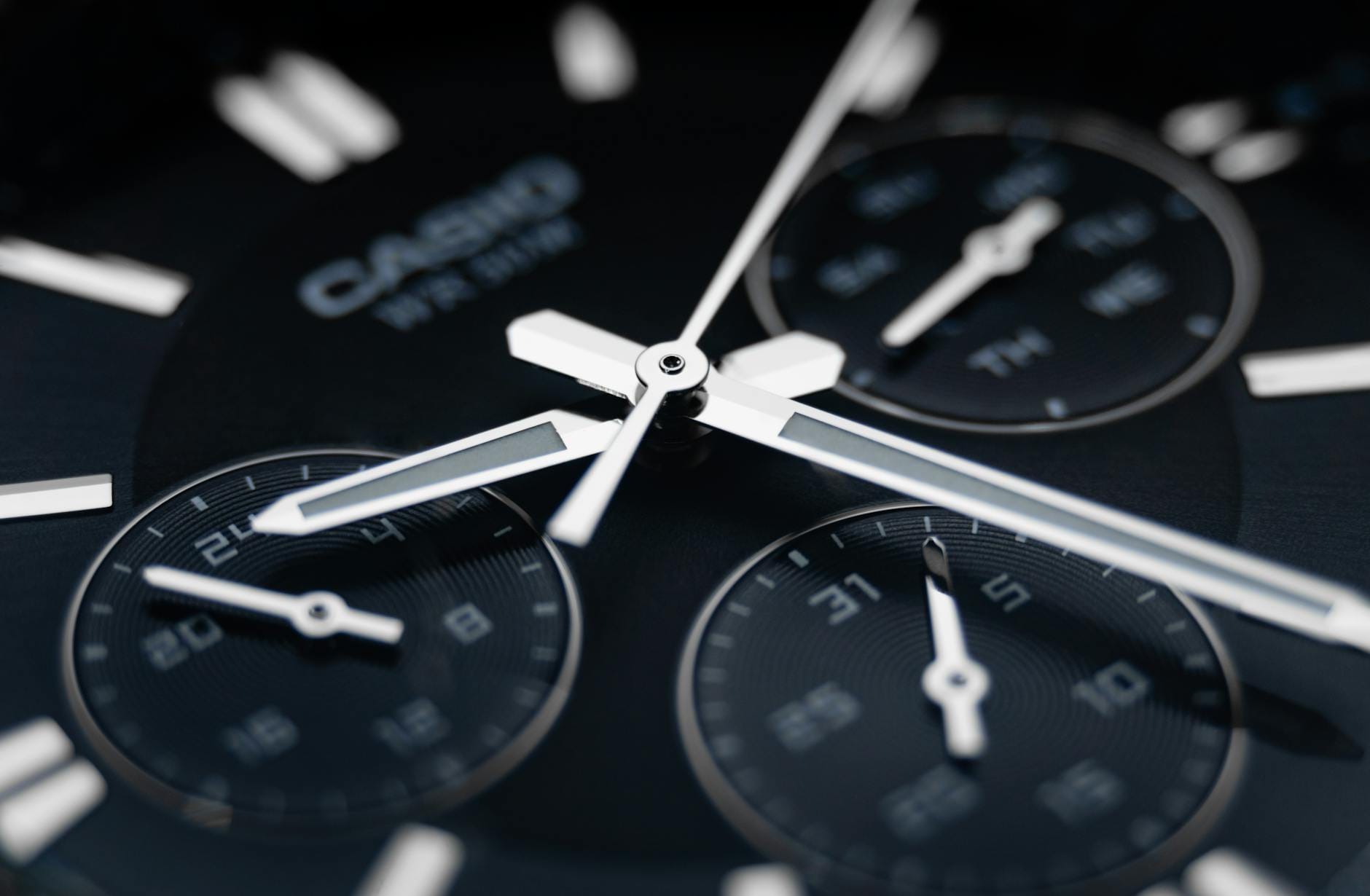
The centrepiece of the 2026 programme is unquestionably the new chronograph. Naoya Hida has spoken in interviews about the chronograph as a complication requiring a specific philosophical justification — he has resisted producing one until he felt the design language was genuinely resolved rather than simply added to the catalogue for commercial reasons. The result, based on early preview imagery and atelier communications, employs a column-wheel lateral clutch mechanism with a movement that draws on established Swiss ebauche architecture but is substantially reworked and decorated entirely in-house to Hida's exacting standards. Case diameter is reported at 38mm, consistent with the brand's commitment to proportions suited to Japanese and Asian wrist sizes — a detail that resonates strongly with collectors in the region who have long found mainstream Swiss chronographs oversized for daily wear. Expected retail pricing is anticipated in the range of JPY 3,500,000 to JPY 4,500,000 (approximately USD 23,000 to USD 30,000), positioning it squarely against independent peers such as early F.P. Journe Chronomètre Bleu references and Laurent Ferrier Galet Traveller pieces at comparable price points.
Production numbers for the chronograph are expected to be extremely constrained in the first year — industry sources suggest an initial run of no more than 15 to 20 pieces globally. This scarcity, combined with the brand's established secondary market strength, suggests that allocated pieces will appreciate rapidly. Collectors who secured NH Type 1 references at their 2019 and 2020 retail prices have seen those watches trade at 40 to 55 percent above cost on the secondary market as of late 2024, a trajectory that the chronograph, as a first-of-kind complication from this maker, could plausibly exceed.
Collection-Building Insight for Asian Collectors
For serious collectors building a position in independent Japanese watchmaking, the Naoya Hida 2026 programme offers a rare combination of aesthetic coherence, production discipline, and verifiable market appreciation. The brand's refusal to expand output for commercial reasons is a structural advantage: scarcity is not manufactured through marketing but enforced by the physical limits of a small atelier. Collectors approaching this as a long-term holding — particularly the inaugural chronograph — should prioritise direct allocation through authorised channels and retain all original documentation, as provenance completeness is increasingly scrutinised at major Asian auction houses. Pairing a Hida acquisition with complementary holdings in other constrained-production Japanese luxury goods, whether Karuizawa single malt whisky or Makoto Fujimura works on paper, reflects the kind of cross-category connoisseurship that defines the most resilient Asian collections today.
Frequently Asked Questions
How many pieces does Naoya Hida produce annually?
Naoya Hida's total annual production is estimated at between 100 and 150 pieces across all references, making it one of the most limited independent ateliers in the world. Individual references are typically capped at 20 to 30 pieces per year, and some special variants are produced in single-digit quantities.
Where can Asian collectors purchase Naoya Hida watches?
The primary point of purchase is the brand's Ginza boutique in Tokyo. A small number of authorised retail partners exist in Europe and North America, but there are currently no official retail partners based in Hong Kong, Singapore, or mainland China, meaning most Asian collectors either travel to Tokyo or work through trusted intermediaries with established relationships at the atelier.
What is the expected retail price of the 2026 Naoya Hida chronograph?
Based on atelier communications and industry sources, the new chronograph is anticipated to retail in the range of JPY 3,500,000 to JPY 4,500,000, equivalent to approximately USD 23,000 to USD 30,000 at current exchange rates. Final pricing has not been officially confirmed as of publication.
How has Naoya Hida performed on the secondary market?
Secondary market performance has been consistently strong. NH references purchased at retail in 2019 and 2020 have traded at 40 to 55 percent above original cost as of late 2024. Phillips and Antiquorum Hong Kong auction results show hammer prices ranging from HKD 120,000 to HKD 280,000 for well-documented examples, with provenance completeness a key factor in achieving top results.
Why is the 2026 chronograph considered a milestone for the brand?
The chronograph represents the first time Naoya Hida has introduced a mechanical complication of this complexity to the catalogue. Hida has publicly stated that he resisted producing a chronograph until the design was philosophically resolved, lending the piece a significance beyond its technical specification. For collectors, a maker's first complication — especially from an atelier with this level of market credibility — has historically proven to be among the strongest long-term holdings in a collection.
🥃 Building a whisky cask collection? Whisky Cask Club curates rare Scottish casks for private collectors across Asia.