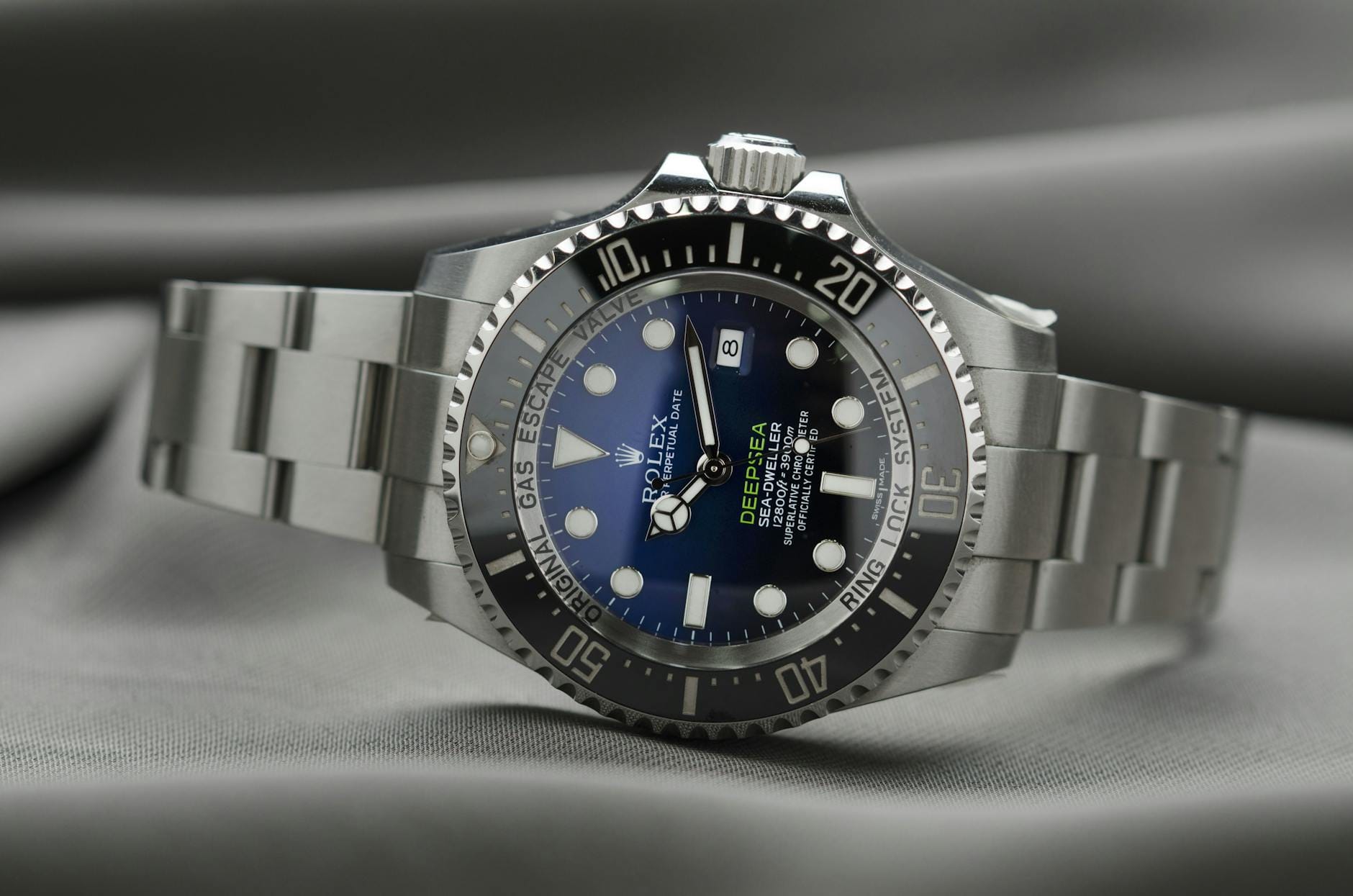
Favre Leuba has launched meteorite and malachite dial variants of the Deep Raider Renaissance, limited to 28 and 38 pieces globally and priced from CHF 15,800. With 287 years of brand history and Gibeon meteorite provenance, these micro-editions present a strong case for Asian collectors seeking asymmetric horological value.
TL;DR: Favre Leuba has introduced two extraordinary new variants of its Deep Raider Renaissance — one featuring a genuine meteorite dial and another in vivid malachite — pushing this Swiss heritage dive watch into serious collector territory. With limited production numbers and natural stone dials that guarantee zero two are alike, these pieces demand attention from Asian collectors who prize rarity and material provenance above all.
Why the Favre Leuba Deep Raider Renaissance Deserves Collector Attention
Favre Leuba, founded in Le Locle, Switzerland in 1737, holds the distinction of being one of the oldest Swiss watch manufactures still producing under its original name. That provenance alone commands respect in serious horological circles, but the brand's recent renaissance — quite literally, given the model name — has been nothing short of remarkable. After a period of dormancy, Favre Leuba was revived under the stewardship of the Tata Group's Titan Company, which acquired the brand in 2011 and began relaunching it with a focus on technical innovation and historical authenticity. The Deep Raider, originally a groundbreaking dive watch from the 1960s, has been reborn as the Deep Raider Renaissance, and the latest meteorite and malachite variants represent the most compelling chapter in that relaunch story yet.
The original Deep Raider was a technical milestone when it debuted — one of the world's first watches to feature an independent depth gauge complication built into the watch itself. That heritage gives the Renaissance line genuine mechanical credibility, not just aesthetic novelty. Collectors who have tracked the brand's trajectory since the Titan acquisition will note that each new release has pushed further into premium territory, and these natural stone dial versions represent the clearest statement of intent so far.
What Makes the Meteorite and Malachite Dials So Significant?
The meteorite dial variant uses a slice of Gibeon meteorite, a pallasite-class iron-nickel meteorite that fell over Namibia and was first identified scientifically in 1836. Gibeon meteorite is prized for its distinctive Widmanstätten pattern — a crystalline structure that forms only over billions of years of slow cooling in the vacuum of space and cannot be replicated artificially. Each dial section is therefore completely unique, meaning no two watches in this series will ever share the same visual fingerprint. Production is limited to approximately 28 pieces globally, a figure that places this watch firmly in the micro-edition category that serious collectors in Hong Kong, Singapore, and Tokyo have come to favour for its long-term scarcity value.
The malachite variant draws on an equally storied material history. Malachite, a copper carbonate hydroxide mineral, has been used in decorative arts and jewellery since ancient Egypt and was famously deployed in the grand interiors of the Hermitage Museum in St. Petersburg. The vivid banded green of malachite has long held cultural resonance across Asia — in Chinese decorative arts, green stones carry associations with prosperity and nature — making this particular variant especially legible to Asian collectors as both a horological object and a cultural artefact. The malachite Deep Raider Renaissance is similarly limited, with production capped at 38 pieces worldwide.
Specifications, Pricing, and the Numbers That Matter
Both variants are housed in a 43mm stainless steel case with a water resistance rating of 300 metres, consistent with the Deep Raider's dive watch DNA. The movement is the in-house calibre RR 2201, a self-winding mechanical movement with a 42-hour power reserve, visible through a sapphire caseback. The depth gauge complication — the feature that made the original Deep Raider historically significant — is retained, with a mechanical depth indicator reading to 200 metres. Retail pricing for the meteorite variant is set at approximately CHF 18,500 (roughly USD 20,500 or HKD 160,000), while the malachite edition is priced at CHF 15,800 (approximately USD 17,500 or HKD 136,000). These figures position both watches above entry-level luxury but well within the range where serious collectors in Asia have demonstrated consistent appetite — particularly in the CHF 15,000–25,000 bracket where secondary market premiums for limited natural stone dial watches have historically run between 20% and 45% above retail within 18 to 24 months of sell-out.
Favre Leuba Deep Raider Renaissance — Key Specifications
📌 Case: 43mm stainless steel, 300m water resistance
⚙️ Movement: Calibre RR 2201, self-winding, 42-hour power reserve
🌑 Meteorite Edition: ~CHF 18,500 | Limited to 28 pieces
🟢 Malachite Edition: ~CHF 15,800 | Limited to 38 pieces
🗺 Find an authorised dealer in Asia
Why Asian Collectors Should Be Moving Quickly
The natural stone dial category has been one of the most consistently rewarding sub-segments of the luxury watch market for Asian collectors over the past decade. Reference points abound: Rolex's meteorite dial Daytona references have traded at auction between 1.5x and 2.2x retail at Christie's and Sotheby's Hong Kong in recent years, while Patek Philippe's malachite-dialled Calatravas have achieved similar premiums at Phillips Geneva. Favre Leuba is not yet in that tier of brand recognition, but the combination of genuine mechanical heritage, authenticated natural materials, micro-edition production numbers, and a parent company with the financial depth of Titan Group creates a compelling risk-adjusted case for acquisition. The brand's authorised dealer network in Asia spans Singapore, Hong Kong, and select Japanese retailers, and allocation for these editions is expected to be extremely tight given global production figures.
For collectors building a diversified horological portfolio, a micro-edition natural stone dial watch from a manufacture with a 287-year history — at a price point under CHF 20,000 — represents the kind of asymmetric opportunity that rarely presents itself twice. The meteorite dial in particular carries a provenance story that transcends watchmaking entirely: a material formed 4.5 billion years ago, shaped by the cosmos, and now encased in a dive watch with a depth gauge. That narrative is precisely the kind of layered provenance that resonates at auction and in private sale conversations alike.
Frequently Asked Questions
How many pieces of the Favre Leuba Deep Raider Renaissance meteorite edition are being produced?
The meteorite dial variant is limited to approximately 28 pieces worldwide, making it one of the most restricted editions in the Deep Raider Renaissance line to date.
What type of meteorite is used in the Favre Leuba Deep Raider Renaissance dial?
The dial uses a section of Gibeon meteorite, an iron-nickel pallasite that fell over Namibia and is scientifically dated to approximately 4.5 billion years old. It is prized for its naturally occurring Widmanstätten crystalline pattern, which forms only through extremely slow cooling in space and cannot be artificially reproduced.
What is the retail price of the Favre Leuba Deep Raider Renaissance malachite edition?
The malachite edition retails at approximately CHF 15,800, equivalent to roughly USD 17,500 or HKD 136,000 at current exchange rates. The meteorite edition is priced slightly higher at approximately CHF 18,500.
Who owns Favre Leuba and what is the brand's ownership history?
Favre Leuba was founded in Le Locle, Switzerland in 1737 and is one of the oldest Swiss watch brands still operating under its original name. The brand was acquired in 2011 by Titan Company, a subsidiary of the Tata Group, one of India's largest conglomerates, which funded the brand's revival and repositioning in the luxury segment.
Have natural stone dial watches from smaller Swiss manufactures performed well at auction in Asia?
Yes. While Rolex and Patek Philippe meteorite and malachite dial references remain the benchmark, smaller manufactures with authenticated limited editions and genuine mechanical heritage have shown secondary market premiums of 20–45% above retail within 18–24 months of sell-out, particularly at Hong Kong and Singapore auction houses.
🥃 Building a whisky cask collection? Whisky Cask Club curates rare Scottish casks for private collectors across Asia.