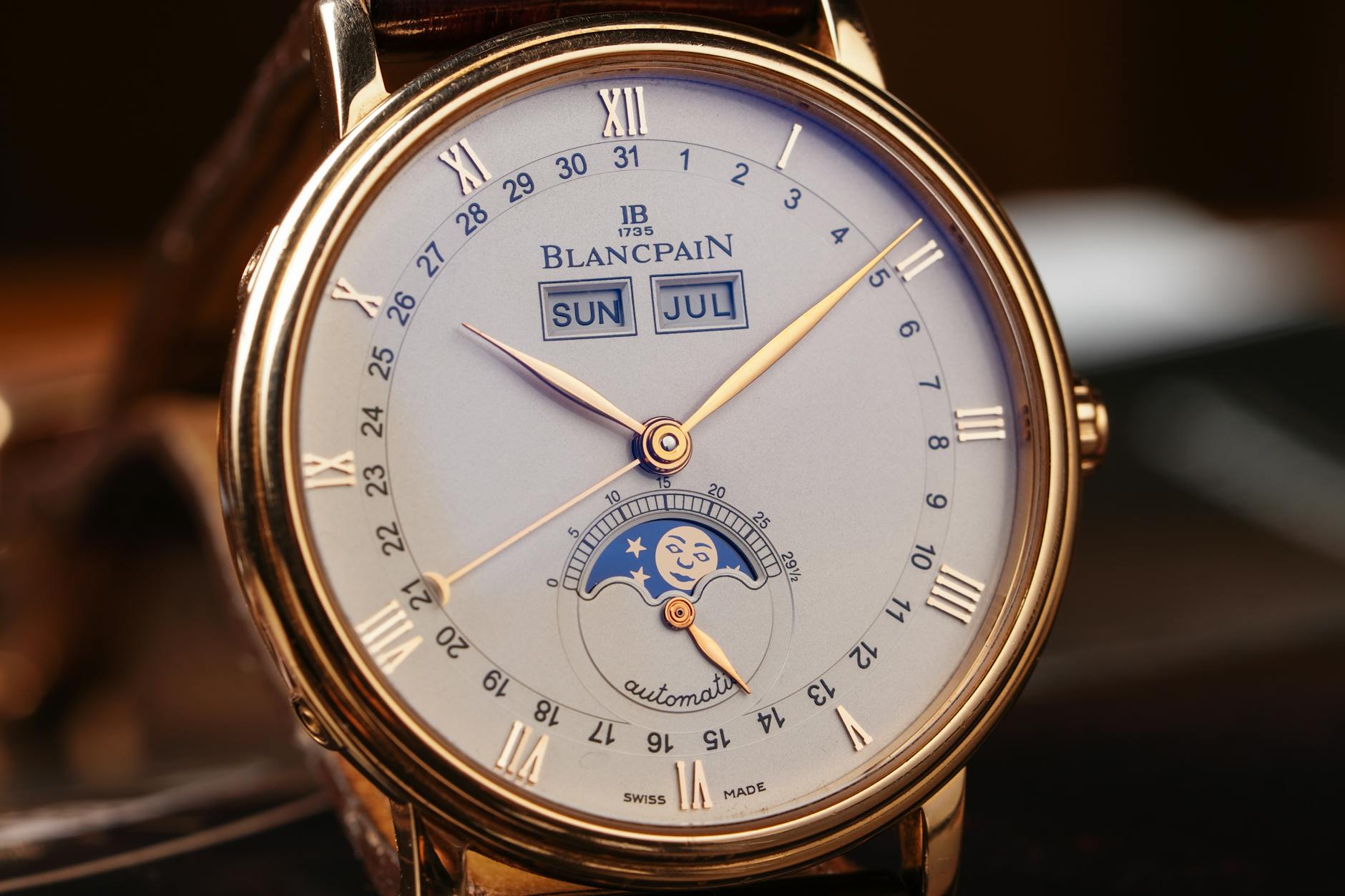
Union Glashütte's Belisar Chronograph Moon Phase Skeleton launches in Steel Blue at EUR 4,490, offering a skeletonised Glashütte-made chronograph with 122-year moon phase accuracy — strong value versus Swiss peers and a credible pick for Asian collectors building diversified watch portfolios.
Union Glashütte Belisar Chronograph Moon Phase Skeleton: A New Direction in Steel and Blue
The Union Glashütte Belisar Chronograph Moon Phase Skeleton arrives in 2024 as one of the most technically ambitious releases from this storied Saxony manufacture, priced at approximately EUR 4,490 (roughly USD 4,850 or HKD 37,900 at current rates). This new iteration takes a model long admired for its classical elegance and pivots decisively toward a more architectural, open-worked aesthetic — without abandoning the horological credibility that has made Union Glashütte a quiet favourite among discerning European and Asian collectors alike. For those who track the mid-range mechanical watch segment, this release signals a meaningful shift in how German watchmaking is positioning itself against Swiss competitors at the same price point.
What Makes the Skeleton Dial and Steel-Blue Combination Significant?
The defining feature of this new Belisar is its skeletonised dial, which exposes the movement architecture beneath a dial surface treated in a cool, metallic "Steel Blue" finish. Union Glashütte has engineered the open-working so that the chronograph bridges and the moon phase mechanism remain legible without sacrificing the structural integrity of the watch — a balance that is considerably harder to achieve than it appears. The result is a dial that rewards close inspection, revealing Glashütte-style finishing including three-quarter plates and blued screws, hallmarks of the Saxon tradition that date back to the founding of the region's watchmaking industry in 1845.
The case measures 44mm in stainless steel, fitted on a matching steel bracelet that reinforces the cohesive "Steel Blue" visual language across the entire piece. Water resistance is rated to 30 metres — adequate for daily wear though not for sport. The chronograph operates via a column wheel mechanism, and the moon phase complication is accurate to one day's deviation over 122 years, a specification that places it well above entry-level moon phase implementations. Limited production figures have not been officially disclosed, though Union Glashütte typically produces its Belisar variants in runs of several hundred pieces annually, keeping secondary market supply genuinely constrained.
Provenance and the Union Glashütte Heritage Story
Union Glashütte was founded in 1893 in the town of Glashütte, Saxony — the same geographic cradle that produced A. Lange & Söhne, Nomos, and Glashütte Original. The brand was absorbed into the Swatch Group in 2000, giving it access to significant industrial resources while retaining its independent design identity and Saxon workshop credentials. This provenance matters enormously in the collector context: every Union Glashütte watch carries the legal right to bear the "Glashütte" designation on its dial, a protected geographic indication that requires a minimum of 50% of the movement's value to be created within the town's boundaries. For Asian collectors who have grown increasingly sophisticated about German horology — particularly in markets like Hong Kong, Singapore, Taiwan, and South Korea — this geographic authenticity is a meaningful differentiator from generic Swiss mid-range offerings.
The Belisar line itself was introduced as Union Glashütte's flagship complication platform, combining chronograph and moon phase functions in a single movement — a combination that historically commands a price premium of 30–50% over standalone chronograph references at comparable quality levels. Earlier Belisar references in rose gold have appeared at Hong Kong auction pre-sales estimated between HKD 28,000 and HKD 35,000, suggesting the steel version carries genuine secondary market potential as the brand's profile continues to rise in Asia.
Why Asian Collectors Should Pay Attention Now
The timing of this release is strategically significant for Asian collectors building diversified watch portfolios. As Rolex, Patek Philippe, and Audemars Piguet continue to trade at multiples of retail on the grey market, the mid-range German segment — Union Glashütte, Nomos, and Laco among them — represents a window of relative accessibility before institutional collector attention fully arrives. The Belisar Skeleton in Steel Blue, at under USD 5,000, offers a genuine Glashütte-made chronograph with moon phase and skeleton architecture at a price point where comparable Swiss complications routinely begin at USD 8,000 to USD 12,000. Collectors in Singapore and Hong Kong who tracked early Nomos Glashütte acquisitions in the 2010s will recognise the pattern: Saxon watchmaking consistently appreciates once Asian market awareness catches up to European connoisseurship.
The steel bracelet configuration is particularly well-suited to Asian market preferences, where integrated bracelet designs have commanded consistent premiums at regional auctions over the past five years. Pairing that with the skeleton dial — a complication that photographs exceptionally well for collector documentation and social sharing — gives this reference strong presentational appeal beyond its mechanical substance.
Collection-Building Insight and Market Outlook
For the serious Asian collector assembling a curated watch collection, the Belisar Chronograph Moon Phase Skeleton occupies a strategic position: it is a fully credentialed Germanic complication watch at a price that remains below the threshold where most grey market speculation occurs. The steel and blue configuration is likely to be produced in smaller numbers than the brand's more conservative dial variants, which historically creates the conditions for above-retail secondary market performance within three to five years. Acquiring at retail — through authorised Union Glashütte dealers in Singapore, Hong Kong, or Tokyo — remains the most straightforward entry point, and the brand's Swatch Group distribution network ensures service infrastructure across Asia is well established. This is a reference worth cataloguing now, before the broader market catches up.
🥃 Building a whisky cask collection? Whisky Cask Club curates rare Scottish casks for private collectors across Asia.
Frequently Asked Questions
What is the retail price of the Union Glashütte Belisar Chronograph Moon Phase Skeleton in Steel and Blue?
The reference is priced at approximately EUR 4,490, which translates to roughly USD 4,850 or HKD 37,900 at current exchange rates. It is available through authorised Union Glashütte retailers globally, including in Singapore, Hong Kong, and Tokyo.
How accurate is the moon phase complication on the Belisar Skeleton?
The moon phase mechanism on the Belisar Chronograph is accurate to a deviation of one day over 122 years, placing it well above the standard found in most entry- and mid-level moon phase watches. Manual correction is rarely required under normal use.
Is Union Glashütte a genuine Glashütte manufacture?
Yes. Union Glashütte was founded in 1893 in Glashütte, Saxony, and is legally entitled to use the protected "Glashütte" geographic designation. This requires a minimum of 50% of the movement's value to be produced within the town of Glashütte, a standard the brand meets. It has been part of the Swatch Group since 2000.
What is the case size and water resistance of the Belisar Skeleton?
The case measures 44mm in stainless steel and is fitted with a matching steel bracelet. Water resistance is rated to 30 metres, making it suitable for everyday wear but not for swimming or water sports.
How does the Belisar Skeleton compare in value to Swiss chronograph competitors at the same price point?
At under USD 5,000, the Belisar Skeleton offers a skeletonised dial, column wheel chronograph, and high-precision moon phase complication — a combination that typically begins at USD 8,000 to USD 12,000 in Swiss watchmaking. For collectors tracking the German mid-range segment, this represents a meaningful value differential with genuine provenance credentials.