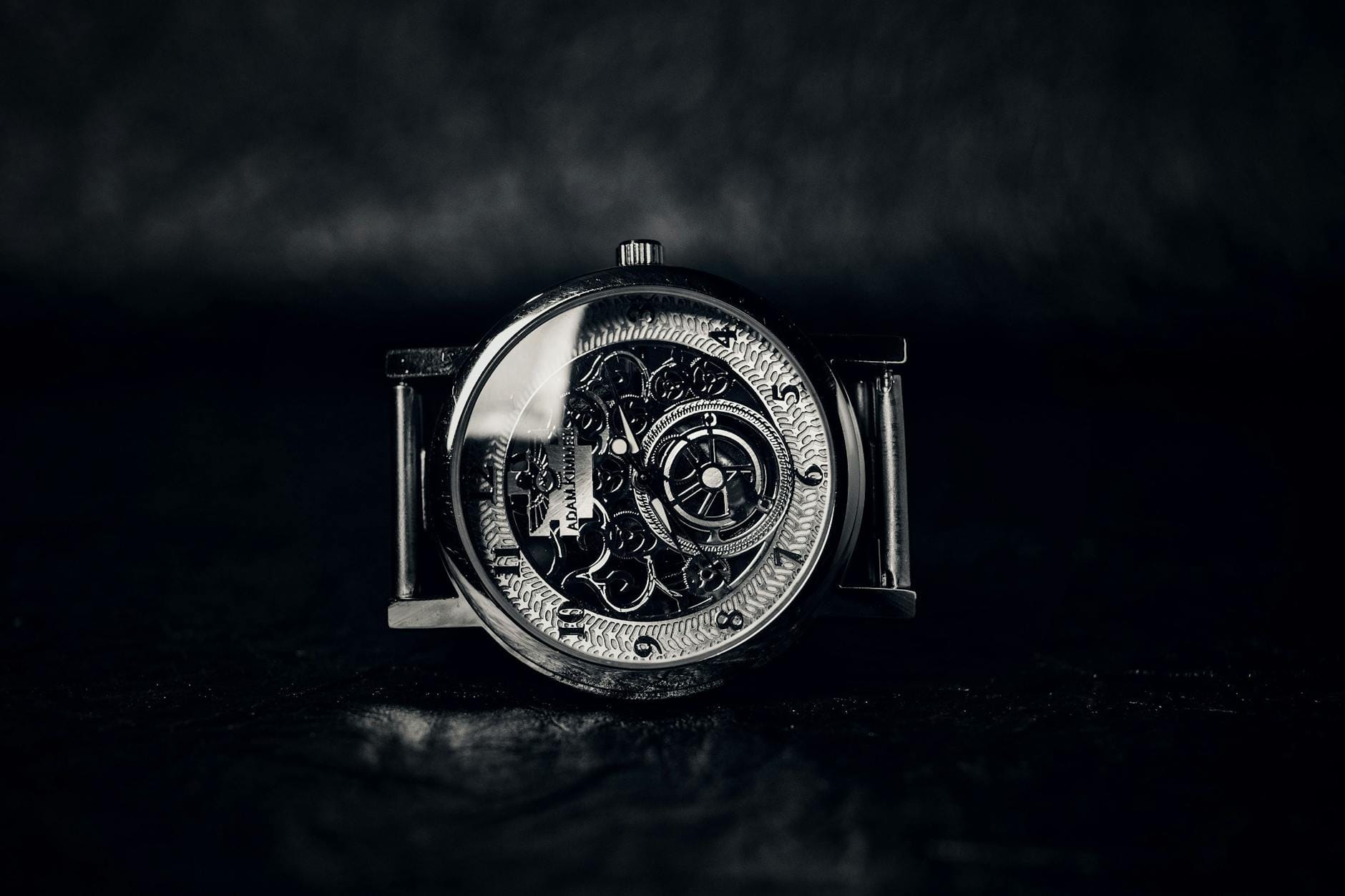
Naoya Hida's 2026 releases include a persimmon lacquer dial and upgraded 62-hour movement, with only 150–180 watches made annually. Secondary market premiums run 25–60% above retail. Asian collectors should act before pricing reaches peak Journe-level premiums.
Naoya Hida Watches: The New 2026 Releases Collectors Must Know
Naoya Hida watches have become one of the most closely watched names in independent horology, and the Japanese maker's 2026 releases confirm why serious collectors across Asia are paying close attention. With production capped at fewer than 200 pieces annually across all references, and secondary market premiums routinely running 40 to 60 percent above retail, these are not watches you admire from a distance — they are objects of genuine rarity with a provenance story that resonates deeply with collectors who understand the value of singular craft. The new releases, previewed in limited hands-on sessions earlier this year, extend the maison's signature aesthetic while introducing subtle complications and dial treatments that push the work into new territory.
What Makes Naoya Hida's Craft So Distinctive?
Naoya Hida founded his atelier in Tokyo in 2019 after years of deep study in both European and Japanese horological traditions. Every watch bears his name because every watch is substantially his work — from the hand-finished movements drawing on ébauches from trusted Swiss suppliers to the meticulous dial lacquering and case finishing done in-house. The brand produces roughly 150 to 180 watches per year, a figure that places it firmly in the micro-production tier occupied by names like Philippe Dufour and F.P. Journe in their earliest years. Retail pricing for the core NH Type 1 and Type 2 references sits between approximately JPY 1,800,000 and JPY 3,200,000 (roughly USD 12,000 to USD 21,500 at current exchange), but acquiring one at retail requires a relationship with the atelier and, frequently, a waiting period of 18 months or longer.
The 2026 releases introduce a new dial colourway in a deep persimmon lacquer — a colour with clear resonance in Japanese craft traditions — alongside a refined version of the hand-wound movement featuring an upgraded barrel geometry that extends power reserve from 48 to 62 hours. A limited sub-series of eight pieces features a hand-engraved caseback, each unique, placing those examples firmly in the category of wearable art rather than simply precision timekeeping. At recent private sales in Tokyo and Hong Kong, comparable single-owner Naoya Hida examples have changed hands at between JPY 2,400,000 and JPY 4,100,000, representing appreciation of 25 to 35 percent over original retail within two to three years of acquisition.
Why Asian Collectors Should Be Paying Close Attention
The appetite for independent Japanese watchmaking among collectors in Hong Kong, Singapore, Taiwan, and mainland China has grown sharply since 2022, driven by a broader reassessment of what constitutes genuine horological value. Where the previous decade saw Asian collector attention focused heavily on Swiss grandes maisons — Patek Philippe, A. Lange and Söhne, Richard Mille — the current cycle shows a meaningful rotation toward makers whose output is small enough that ownership itself signals access and connoisseurship. Naoya Hida sits at the precise intersection of those qualities: Japanese cultural identity, micro-production credibility, and a secondary market that has not yet reached the frothy premiums seen on vintage Patek or early Journe references, meaning there is still room for considered acquisition at rational prices.
For collectors in Asia specifically, the persimmon lacquer dial of the 2026 release carries additional meaning. The use of kakishibu-inspired colouring — referencing the traditional Japanese technique of fermenting persimmon tannin into a natural dye — connects the watch to a lineage of Japanese material culture that extends centuries beyond watchmaking itself. This is the kind of provenance depth that resonates in collecting circles from Taipei to Shanghai, where the story behind an object matters as much as its technical specification. Auction houses including Phillips and Bonhams have noted in their 2025 watch market reports that independent Japanese makers now represent one of the fastest-growing segments of collector interest across Asia Pacific, with average lot values for top-tier Japanese independents rising approximately 18 percent year-on-year between 2023 and 2025.
Key Specifications and Rarity Figures at a Glance
- Annual production: 150–180 pieces across all references
- 2026 persimmon lacquer sub-series: Estimated 30–40 examples
- Hand-engraved caseback limited run: 8 unique pieces
- Retail price range: JPY 1,800,000–JPY 3,200,000 (approx. USD 12,000–USD 21,500)
- Secondary market premium over retail: 25–60 percent depending on reference and condition
- Power reserve (2026 movement upgrade): 62 hours
- Waiting period at atelier: 12–24 months for new clients
Building a Position in Independent Japanese Horology
For the collector building a serious watch portfolio, Naoya Hida represents the kind of early-stage opportunity that Journe collectors in Asia recall missing in the early 2000s. The secondary market is liquid enough to provide exit options but not so saturated that premiums have already been fully extracted. The key discipline is provenance documentation: insist on original box, papers, and where possible a direct purchase receipt or atelier correspondence confirming the chain of custody. Single-owner examples with complete documentation command a measurable premium — typically 8 to 15 percent above comparable examples with incomplete records — and that gap tends to widen as a maker's reputation matures.
Collectors entering this space should also consider the broader context of Japanese independent watchmaking as a category. Names including Hajime Asaoka, Kari Voutilainen's collaborations with Japanese craftspeople, and the emerging work of younger Tokyo-based makers are all contributing to a moment of genuine creative energy in Japanese horology. Naoya Hida is currently the most internationally recognised of this cohort, which means the window for acquisition at pre-peak pricing may be measured in years rather than decades. The 2026 releases, with their expanded power reserve, culturally resonant dial work, and strictly limited engraved sub-series, are as strong an argument as the atelier has yet made for serious collector attention.
Frequently Asked Questions
How many Naoya Hida watches are produced each year?
The atelier produces approximately 150 to 180 watches annually across all references, making it one of the most genuinely micro-production independent watchmakers currently active. This figure has remained deliberately stable since the brand's founding in 2019.
What is the current retail price range for a Naoya Hida watch?
Retail pricing spans roughly JPY 1,800,000 to JPY 3,200,000, equivalent to approximately USD 12,000 to USD 21,500 at mid-2025 exchange rates. Acquiring at retail requires a direct relationship with the atelier and typically involves a waiting period of 12 to 24 months.
How has the secondary market performed for Naoya Hida watches?
Secondary market premiums over retail have ranged from 25 to 60 percent depending on reference, condition, and provenance completeness. Private sales in Tokyo and Hong Kong have recorded examples changing hands at JPY 2,400,000 to JPY 4,100,000, representing meaningful appreciation within two to three years of original purchase.
Why are Asian collectors specifically interested in Naoya Hida?
The combination of Japanese cultural identity, micro-production credibility, and secondary market pricing that has not yet reached peak premiums makes Naoya Hida particularly compelling for Asian collectors. The 2026 persimmon lacquer dial also carries direct resonance with Japanese craft traditions, adding provenance depth that matters in collecting circles across Hong Kong, Singapore, Taiwan, and mainland China.
What should collectors prioritise when buying a Naoya Hida watch on the secondary market?
Complete provenance documentation is essential: original box, papers, and ideally a purchase receipt or atelier correspondence confirming the chain of custody. Single-owner examples with full documentation typically command an 8 to 15 percent premium over incomplete examples, and that gap tends to widen as the maker's reputation grows.
🥃 Building a whisky cask collection? Whisky Cask Club curates rare Scottish casks for private collectors across Asia.