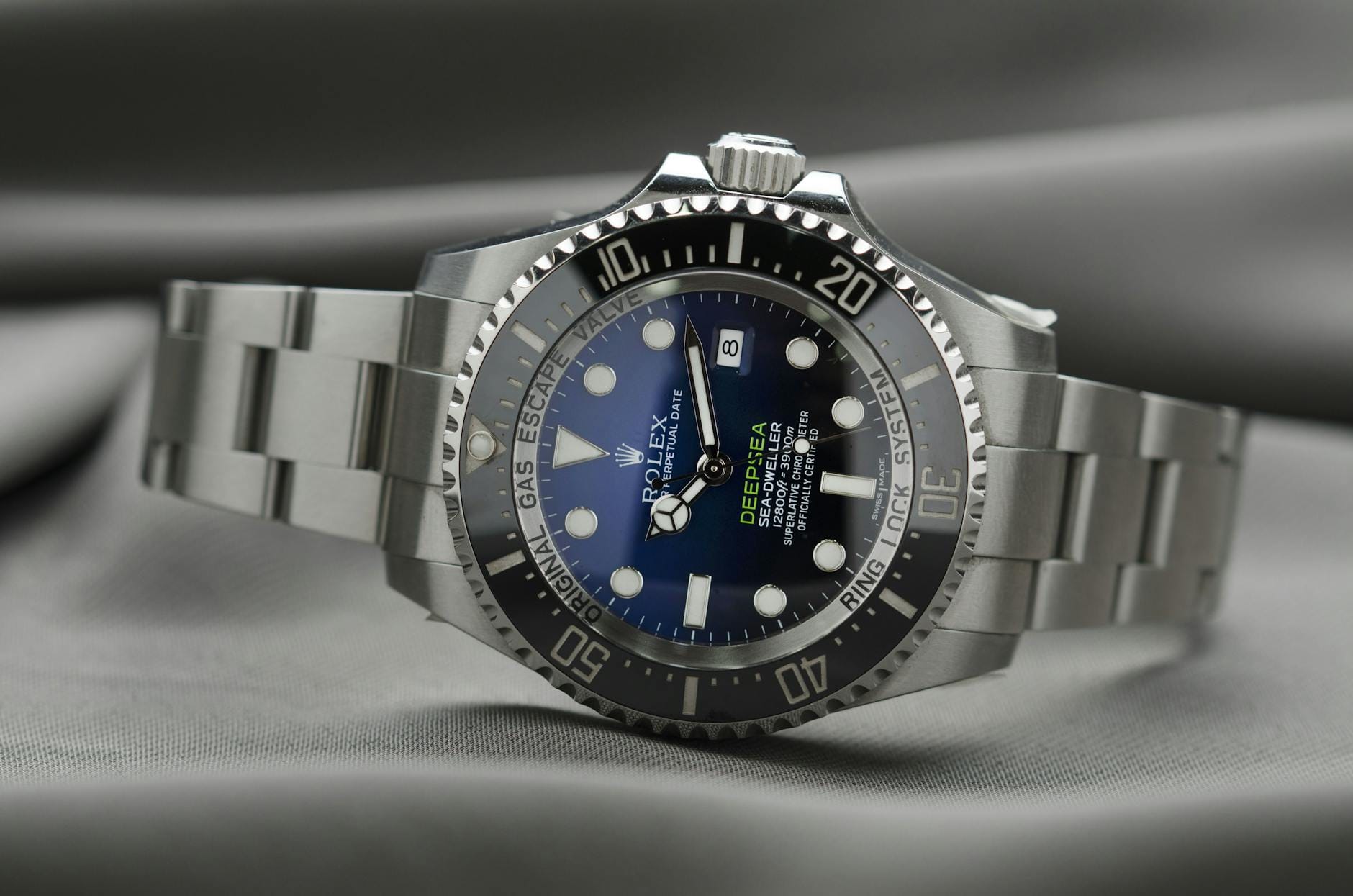
The Bradley Taylor Ardea is an ultra-limited, hand-finished watch from Canada. It features a grade 5 titanium case, an in-house finished movement, and fewer than 20 pieces made annually, making it a significant object for serious collectors.
{"title":"Bradley Taylor Ardea Watch: Canada's Most Ambitious Independent Release","html":"
What Is the Bradley Taylor Ardea, and Why Should Collectors Care?
The Bradley Taylor Ardea is a hand-finished, independently produced wristwatch from a Canadian maker whose total production output numbers fewer than 20 pieces per year — placing it firmly in the ultra-limited tier that serious collectors in Hong Kong, Singapore, and Tokyo have learned to track before secondary market premiums make entry prohibitive. Bradley Taylor is a Canadian independent watchmaker operating out of British Columbia, and the Ardea represents his most technically resolved timepiece to date, featuring an in-house-influenced movement construction, a case machined from grade 5 titanium, and a dial architecture that draws on the skeletal geometry of the grey heron — the bird whose Latin name, Ardea cinerea, gives the watch its title. For collectors who have watched micro-brands from Switzerland and Japan command five-figure premiums at auction within three years of release, the Ardea is precisely the kind of object that warrants early attention.
Asian collectors specifically should care for a structural reason: the independent watchmaking category — dominated for decades by Swiss names like F.P. Journe, Philippe Dufour, and Kari Voutilainen — is expanding geographically, and early-stage acquisitions from credible non-Swiss independents have demonstrated meaningful appreciation. A Voutilainen Vingt-8 purchased at retail in 2015 for approximately CHF 38,000 has since traded at auction for upwards of CHF 120,000, a trajectory that collectors in this region understand intimately. The Ardea is not in that league yet — but provenance-aware buyers know that the time to study a maker is before the waiting list closes.
How Does the Bradley Taylor Ardea Work, and What Are Its Specifications?
The Bradley Taylor Ardea operates via a manually wound movement that Taylor has developed with a focus on visible finishing quality — a philosophy that positions the piece closer to haute horlogerie practice than to the production-line independent sector. The movement features hand-bevelled bridges, black-polished steel components, and a power reserve of approximately 72 hours, giving the watch genuine daily-wear practicality without sacrificing the aesthetic discipline that defines the project. Taylor has spoken publicly about his commitment to doing finishing work himself rather than outsourcing it to ébauche suppliers, a distinction that matters enormously when assessing long-term collector value.
The case measures 39mm in diameter — a size that has re-emerged as the consensus sweet spot among serious collectors after years of oversized trend cycles — and is crafted in grade 5 titanium for a wearing weight that makes the piece genuinely comfortable on smaller wrists common across Asian markets. The dial is open-worked in sections, allowing visibility into the movement architecture, while retaining legibility through applied hour markers in white gold. The combination of titanium case and manual-wind movement keeps the total weight under 60 grams on bracelet, a practical consideration that resonates strongly with collectors in humid climates.
Bradley Taylor Ardea — Key Specifications
- Case material: Grade 5 titanium
- Case diameter: 39mm
- Movement type: Manually wound, in-house finished
- Power reserve: Approximately 72 hours
- Dial: Partially skeletonised with white gold applied markers
- Water resistance: 50 metres
- Annual production: Fewer than 20 pieces
- Origin: British Columbia, Canada
- Retail price: Available on direct application; estimated CAD 28,000–35,000
Why Does Independent Watchmaking From Outside Switzerland Command Collector Premiums?
Independent watchmaking from outside Switzerland commands collector premiums because scarcity, finishing quality, and maker narrative are the three variables that drive long-term value — and none of those variables are geographically exclusive to Geneva or the Vallée de Joux. The independent category has historically been dominated by Swiss names because Switzerland built the infrastructure, the training pipelines, and the auction house relationships that gave those makers visibility. But that infrastructure advantage is eroding: Phillipe Dufour himself has mentored non-Swiss makers, auction houses including Phillips, Antiquorum, and Christie's have all sold non-Swiss independents at strong hammer prices, and collector communities across Asia have demonstrated willingness to pay for quality regardless of passport.
"The next generation of six-figure independent watches will not all come from Switzerland. Collectors who restrict their research geographically are leaving asymmetric opportunities on the table."
The data supports this shift. According to tracking by the independent watch research community, pieces from Japanese independent Hajime Asaoka have appreciated by over 200% on secondary markets since his Tsunami model debuted at approximately USD 15,000 retail. American independent Nicholas Manousos of Ahci has seen similar secondary interest. Bradley Taylor, with his combination of formal training, transparent production philosophy, and sub-20-piece annual output, fits the profile of a maker whose early work will be difficult to acquire within five years. For Asian collectors who have built positions in F.P. Journe's early references or Voutilainen's first decade of production, the Ardea represents a structurally similar opportunity at a fraction of the current entry cost.
Where Can Asian Collectors Acquire the Bradley Taylor Ardea?
Asian collectors can acquire the Bradley Taylor Ardea through direct application to Bradley Taylor's studio in British Columbia, Canada — there is no retail distribution network, no authorised dealer in Asia, and no grey market supply at present. This direct-to-collector model is itself a provenance asset: every piece has a documented chain of custody from maker to first owner, with no intermediary markup obscuring the transaction history. Taylor accepts enquiries through his official website and has indicated that waitlist positions are reviewed individually, with preference given to collectors who can demonstrate genuine engagement with the work rather than speculative intent.
For collectors in Singapore, Hong Kong, or Tokyo who prefer to examine independent pieces in person before committing, the watch has been shown at regional independent watch events including those organised by the independent watchmaking community in North America, and Taylor has expressed openness to travelling for collector meetings in Asia as demand warrants. The absence of a local dealer network is a short-term inconvenience that historically becomes a long-term provenance advantage — early Journe pieces sold direct carry the same documentation clarity that now commands premiums at Phillips Geneva. Secondary market appearances for Bradley Taylor pieces are rare, but when they do surface, expect them to appear through specialist independent watch platforms rather than mainstream auction houses in the near term.
What Should Collectors Watch for in the Bradley Taylor Story Going Forward?
Collectors should monitor three specific developments in the Bradley Taylor narrative over the next 24 months. First, any expansion of annual production beyond the current sub-20-piece ceiling would signal a shift in the maker's commercial orientation — historically, independents who scale production early sacrifice the scarcity premium that drives secondary market appreciation. Second, watch for institutional validation: a first appearance in a major auction house catalogue, even as a single lot, typically functions as a price-discovery event that resets collector expectations upward. Third, track whether Taylor pursues membership in the Académie Horlogère des Créateurs Indépendants, known as AHCI — the organisation whose alumni list reads as a near-complete index of independently made watches that have appreciated significantly. Membership signals peer validation from within the global independent community and is a reliable leading indicator of auction house interest.
The timeline below summarises key reference points for collectors building a research file on Bradley Taylor and the Ardea:
- 2018–2020: Bradley Taylor establishes his British Columbia studio and begins producing early prototype movements, refining finishing techniques.
- 2021–2022: First completed client pieces delivered; collector community in North America begins tracking the work through independent watch forums.
- 2023: Taylor gains wider recognition through coverage in specialist watch media, with the Ardea project formally announced.
- 2024: Ardea officially introduced to the international collector market; waitlist opens for direct applications.
- 2025 and beyond: Watch for first secondary market appearances, potential AHCI application, and possible Asian collector events.
Frequently Asked Questions
What is the Bradley Taylor Ardea retail price in Asian currencies?
The Bradley Taylor Ardea is priced at approximately CAD 28,000–35,000 at the time of introduction, which translates to roughly SGD 29,000–36,000, HKD 160,000–200,000, or JPY 3,100,000–3,900,000 at mid-2024 exchange rates. Pricing is confirmed on direct application to the maker's studio, and no retail markup applies given the direct-to-collector sales model.
How does Bradley Taylor compare to established Swiss independents like F.P. Journe?
Bradley Taylor is at an earlier stage of his career than F.P. Journe, whose first independent pieces date to the 1980s and whose auction records now regularly exceed CHF 200,000. The comparison is relevant for understanding trajectory rather than current equivalence: Journe's earliest directly sold pieces, acquired at retail in the 1990s for under CHF 20,000, now trade at multiples of their original price. Taylor's current retail range and sub-20-piece annual output position him structurally similarly to where Journe stood in his first decade of independent production.
Is the Bradley Taylor Ardea movement entirely in-house?
The Ardea movement is built and finished in-house by Bradley Taylor in his British Columbia studio, with Taylor performing the hand-bevelling, black polishing, and assembly personally. The base calibre architecture draws on established Swiss ébauche engineering principles, but the finishing and construction work is entirely Taylor's own — a distinction that is standard practice among credible independents including many AHCI members and does not diminish the piece's collector standing.
Has any Bradley Taylor watch appeared at auction, and at what price?
As of mid-2024, no Bradley Taylor piece has appeared at a major public auction. The maker's output is sufficiently recent and limited that secondary market transactions have occurred privately within the collector community rather than through auction houses. This is consistent with the early-career pattern of most independents who later achieve strong auction results — Philippe Dufour's Simplicity did not appear at auction until years after its initial release, at which point hammer prices significantly exceeded retail.
Why should Asian collectors prioritise independent watchmakers over established luxury brands?
Asian collectors should not prioritise independents over established brands categorically — the two categories serve different functions in a serious collection. Established brands like Patek Philippe and Rolex provide liquidity and price transparency. Independents like Bradley Taylor provide asymmetric appreciation potential, provenance clarity, and direct maker relationships that established brands cannot replicate at scale. A balanced collection holds both, with independent pieces sized according to the collector's risk tolerance and research depth.
🥃 Building a whisky cask collection? Whisky Cask Club curates rare Scottish casks for private collectors across Asia.
","meta_title":"Bradley Taylor Ardea Watch: Canada's Top Independent Release","meta_description":"Bradley Taylor's Ardea watch — under 20 pieces per year, CAD 28–35K retail. Why Asian collectors should track this Canadian independent maker now.","focus_keyword":"Bradley Taylor Ardea watch","keywords":["independent watchmaker","Canadian watch","limited edition watch","collector watch Asia","micro-production horology","AHCI independent","rare watch investment","hand-finished movement"],"tldr":"Canadian independent watchmaker Bradley Taylor has introduced the Ardea, a titanium, manually wound watch produced in fewer than 20 pieces annually at CAD 28,000–35,000. Early provenance, direct-to-collector sales, and a strong finishing philosophy make it a compelling research target for Asian collectors.","faqs":[{"q":"What is the Bradley Taylor Ardea retail price in Asian currencies?","a":"The Ardea is priced at approximately CAD 28,000–35,000, equivalent to roughly SGD 29,000–36,000 or HKD 160,000–200,000 at mid-2024 rates. Pricing is confirmed on direct application to the maker."},{"q":"How does Bradley Taylor compare to established Swiss independents like F.P. Journe?","a":"Taylor is at an earlier career stage than Journe, whose auction records now exceed CHF 200,000. The comparison is about trajectory: Journe's first retail pieces in the 1990s under CHF 20,000 now trade at multiples. Taylor's current position mirrors Journe's first decade structurally."},{"q":"Is the Bradley Taylor Ardea movement entirely in-house?","a":"The movement is built and finished in-house by Taylor personally in British Columbia, including hand-bevelling and black polishing. The base calibre draws on established Swiss engineering principles, consistent with standard independent watchmaking practice."},{"q":"Has any Bradley Taylor watch appeared at auction, and at what price?","a":"As of mid-2024, no Bradley Taylor piece has appeared at major public auction. Secondary transactions have been private, consistent with early-career independents who later achieve strong hammer prices once auction houses begin cataloguing their work."},{"q":"Why should Asian collectors prioritise independent watchmakers over established luxury brands?","a":"Independents offer asymmetric appreciation potential and provenance clarity that established brands cannot replicate at scale. A balanced collection holds both — established brands for liquidity, independents like the Ardea for long-term value growth and direct maker relationships."}],"entities":{"people":["Bradley Taylor","F.P. Journe","Philippe Dufour","Kari Voutilainen","Hajime Asaoka","Nicholas Manousos"],"organizations":["Académie Horlogère des Créateurs Indépendants (AHCI)","Phillips Auction House","Christie's","Antiquorum","Whisky Cask Club"],"places":["British Columbia, Canada","Geneva","Vallée de Joux","Singapore","Hong Kong","Tokyo"]}}