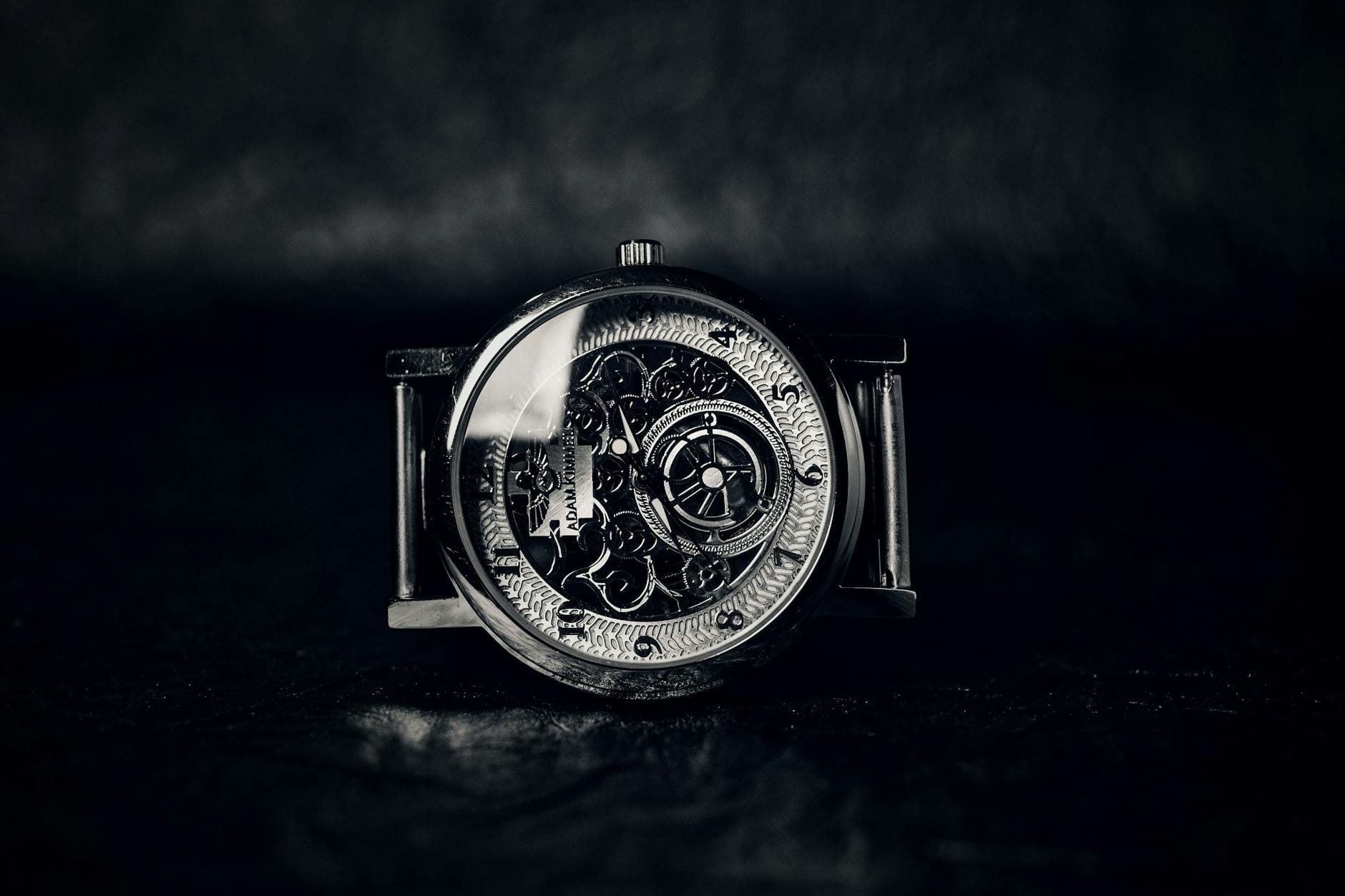
Watch brands raising retail prices far above inflation are seeing grey market discounts of 13%+ in Asia. Serious collectors are migrating capital to independent watchmakers and alternative hard assets with stronger provenance and pricing discipline.
Watch Brand Pricing Strategies Are Alienating Wealthy Asian Collectors
Watch brand pricing strategies have quietly become one of the most corrosive forces undermining collector relationships across Asia's premium market. What was once a carefully managed ecosystem of desire, scarcity, and reward has devolved into a system that punishes loyalty and rewards speculation — and the wealthiest, most serious collectors are beginning to walk away. The Omega Speedmaster Moonwatch Professional Co-Axial Master Chronometer Chronograph 42mm, retailing at approximately USD 7,000 to USD 9,500 depending on configuration and market, sits at the centre of this tension: a watch with genuine horological pedigree, a 65-year provenance trail stretching back to NASA's Apollo programme, and yet a pricing architecture that increasingly fails the collectors who have supported the brand for decades.
The Provenance Argument: Why Heritage Should Command a Premium — But Not an Arbitrary One
The Speedmaster's story is one of the most compelling in watchmaking. Certified by NASA in 1965 after rigorous testing against eleven other chronographs, it was worn by Buzz Aldrin on the lunar surface during Apollo 11 in July 1969 — Neil Armstrong left his aboard the lunar module as a backup timer. That chain of custody, from Biel-Bienne manufacture to wrist-worn lunar instrument, is the kind of provenance that serious collectors in Hong Kong, Singapore, Tokyo, and Shanghai have historically paid meaningful premiums to access. At auction, signed NASA-issued Speedmasters have achieved hammer prices between USD 180,000 and USD 245,000 at Phillips and Christie's over the past three years, with a 1969-era example fetching CHF 198,750 at Phillips Geneva in November 2023 — roughly 22 times its original issue price adjusted for inflation.
The problem is not the heritage. The problem is that brands like Omega, and many of their Swiss peers, have allowed retail pricing to drift upward at rates that outpace both inflation and genuine material or mechanical improvement. Between 2019 and 2024, the Speedmaster Moonwatch's retail price increased by approximately 35% in USD terms — a figure that tracks poorly against the 18% cumulative US inflation over the same period. For a collector in Singapore or Taipei paying in local currency against a strong dollar, the effective increase is steeper still.
How Self-Defeating Pricing Damages the Secondary Market and Collector Trust
The secondary market tells a sobering story. Grey market Speedmaster Moonwatches in Asia currently trade at or below retail in most configurations — a stark contrast to the 15% to 30% premiums seen as recently as 2021. Chrono24 and WatchBox data from Q1 2025 show the 310.30.42.50.04.001 reference — the current steel bracelet variant — selling at an average of USD 6,400 against a retail of approximately USD 7,400 in key Asian markets. That 13.5% discount to retail is not a sign of a healthy collector market; it is a signal that supply has overwhelmed genuine demand at current price points.
For the wealthy collector — the individual spending USD 50,000 to USD 500,000 annually across watches, whisky, art, and rare books — this pricing incoherence is not merely frustrating, it is reputationally damaging to the brand. These are not buyers who clip coupons or hunt for deals. They are buyers who expect the brand to manage its own value proposition with intelligence and respect. When a watch they purchased at retail can be sourced for 13% less on the open market six months later, the implicit promise of the brand relationship has been broken.
What Serious Asian Collectors Are Doing Instead
The capital is not leaving the watch category — it is migrating toward references and brands that demonstrate better pricing discipline. Independent watchmakers such as F.P. Journe, Philippe Dufour, and MB&F have seen consistent secondary market appreciation of 20% to 45% over five-year holding periods, according to auction data compiled from Sotheby's, Phillips, and Antiquorum between 2019 and 2024. F.P. Journe's Chronomètre Bleu, produced in a limited run of approximately 168 pieces in tantalum, last appeared at auction at Phillips Hong Kong in April 2024 achieving HKD 1,320,000 — roughly USD 169,000 — against a pre-sale estimate of HKD 900,000 to HKD 1,200,000. That is the kind of result that builds collector conviction.
Asian collectors are also diversifying their hard asset allocations more deliberately than at any prior point. Whisky cask investment, rare wine, and provenance-documented art are absorbing capital that might previously have flowed into Swiss watchmaking. The lesson for watch brands is structural: when pricing strategy signals indifference to collector economics, the collector's response is rational reallocation. Brands that maintain genuine scarcity, transparent allocation policies, and pricing that respects secondary market dynamics will retain Asia's most valuable clients. Those that do not will find those clients are perfectly capable of finding other objects worthy of their attention and their capital.
Frequently Asked Questions
Why are luxury watch prices rising faster than inflation?
Swiss watch brands have used post-pandemic demand and supply chain disruptions as cover for aggressive price increases. Between 2019 and 2024, several major references increased in price by 30% to 50% in USD terms, well above cumulative inflation. The increases are partly driven by currency hedging, rising material costs, and deliberate brand positioning — but they have outpaced the underlying mechanical and material improvements in many cases.
Is the Omega Speedmaster still a good collector investment?
Vintage and NASA-certified Speedmasters with documented provenance remain strong performers at auction, with select examples achieving six-figure hammer prices at Phillips and Christie's. Modern production references, however, are currently trading below retail on the grey market in Asia, suggesting limited near-term appreciation potential for standard configurations. Collectors should focus on limited editions, signed references, or historically significant variants rather than current production pieces.
Which watch brands are performing best in Asian secondary markets in 2025?
Independent watchmakers including F.P. Journe, Philippe Dufour, and Voutilainen have shown the most consistent secondary market appreciation in Asia. Among major houses, Patek Philippe's complicated references and A. Lange & Söhne's limited production pieces continue to hold value. Brands with transparent allocation policies and genuine scarcity — rather than manufactured waitlists — are outperforming in collector confidence metrics.
How should Asian collectors approach watch allocation in the current market?
Collectors should prioritise direct relationships with authorised dealers who demonstrate genuine allocation transparency. Avoid paying grey market premiums on references that are widely available. Focus capital on documented limited editions, historically significant references, and independent watchmakers whose production numbers are verifiably constrained. Diversification across asset classes — including whisky casks, rare wine, and provenance-rich art — provides both financial and collecting balance.
What is the relationship between retail pricing and secondary market value for luxury watches?
When retail prices are set above the level that the secondary market can sustain, the result is a persistent grey market discount — which erodes collector confidence and brand prestige simultaneously. Healthy collector markets require retail pricing that leaves room for reasonable secondary market appreciation over a three-to-five year holding period. Brands that price at or above secondary market clearing levels effectively destroy the financial incentive for serious long-term collectors to engage with new production.
🥃 Building a whisky cask collection? Whisky Cask Club curates rare Scottish casks for private collectors across Asia.